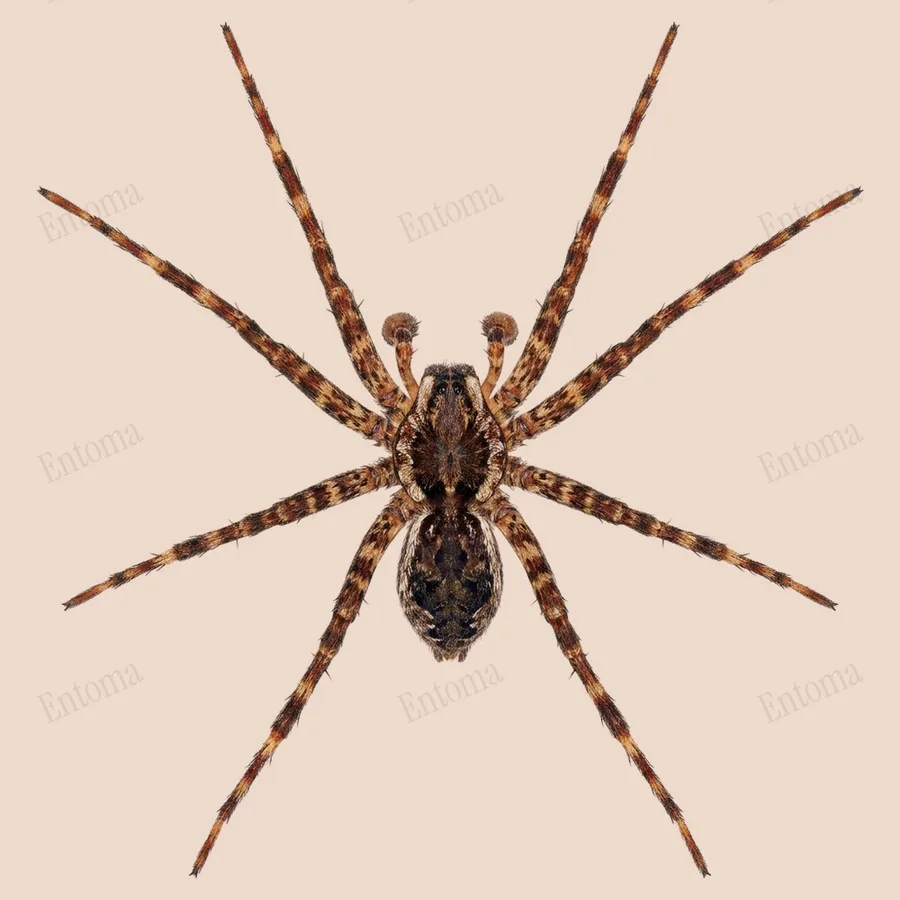
Dark fishing spider
This forest spider rarely goes near water despite its name, and one recorded bite left a small patch of dead skin at the puncture site.
| Where | Forests and stream banks, North America |
|---|---|
| Size | Female 15 to 26 mm, male 7 to 13 mm body length |
| When | March to October |
The dark fishing spider is mottled gray and light brown, with three black W shaped marks down the abdomen, each bordered only along its outer edge by a broken white line. The banded legs carry long dark spines, and adults rest flattened against tree trunks, rocks or logs, often upside down.
By day it lurks in bark crevices, under loose bark or beneath bridges and culverts, then hunts actively after dark for insects, slugs and the occasional small fish or tadpole at the water's edge. It sometimes wanders into houses and basements in wooded areas across North America.
Traits
Habitat
Woodland
Colour
Brown, Grey, Black
Active
Night
To people
Mild
Bites are extremely rare and happen only if the spider is handled; one reported bite caused burning pain, redness and a small patch of dead skin, but this spider is not dangerous to people.
Activity through the year
Often confused with
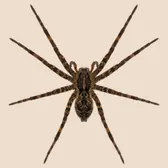
Very similar mottled pattern, but the white borders behind the dark W shaped marks form continuous bands across the abdomen, while the dark fishing spider's white borders are broken into separate patches.
Questions
Is the Dark fishing spider dangerous to people?
Mild. Bites are extremely rare and happen only if the spider is handled; one reported bite caused burning pain, redness and a small patch of dead skin, but this spider is not dangerous to people.
When can you see the Dark fishing spider?
The Dark fishing spider can be seen from March to October, at night.
Plate retouched from a photo by Christian Back, CC BY 4.0, iNaturalist Licence
Report a mistake in this entry
Spiders›Nursery web spiders›Dolomedes
Last updated 2026-09-27. Every entry is checked against published sources.