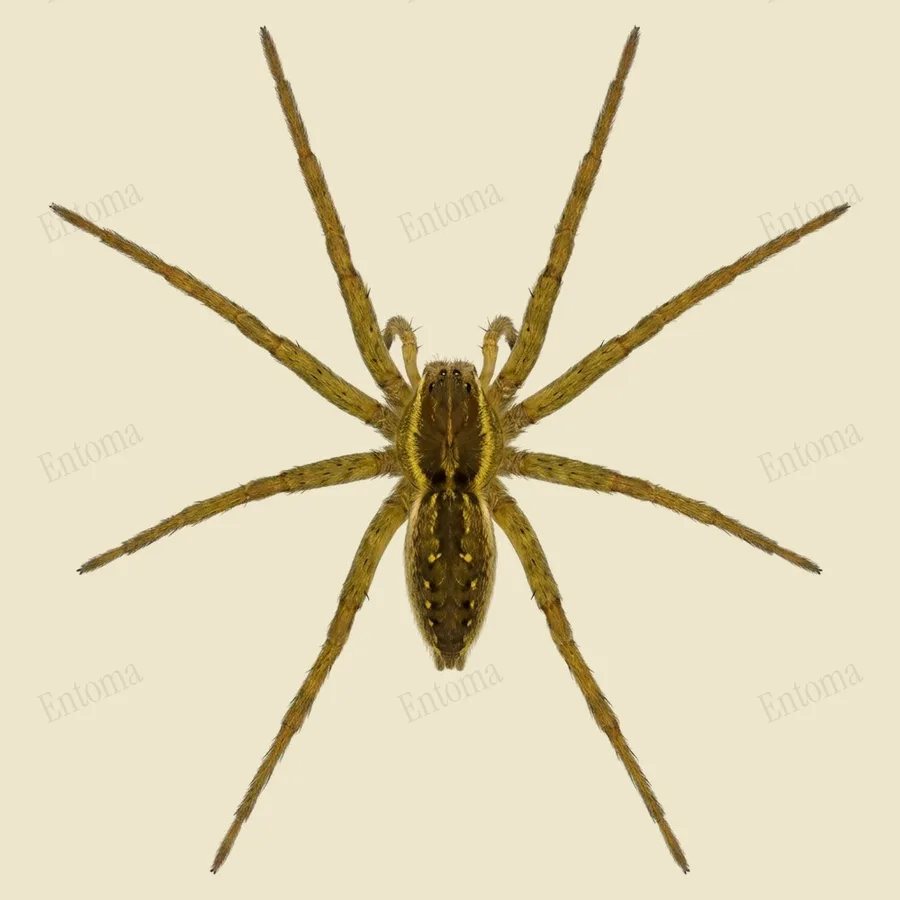
Six-spotted fishing spider
This spider senses the ripples of struggling prey across the water and can dive underwater for several minutes inside a bubble of trapped air.
| Where | Ponds and lakes across North America |
|---|---|
| Size | Female 17 to 26 mm, male 9 to 13 mm body length |
| When | March to October |
The six-spotted fishing spider is dark brown with a pale stripe bordering the carapace and rows of small white spots down the abdomen. Females are considerably larger than males and can exceed 30 mm in body length.
It hunts by day at the edges of ponds and slow streams, resting with its legs on the water's surface to feel for vibrations from insects, tadpoles and small fish. It is widespread across the United States and Canada and quickly flees into the water when disturbed.
Traits
Habitat
Wetland
Colour
Brown, White, Yellow
Active
Day
To people
Not aggressive and quick to flee into the water rather than confront people; bites are rare and not medically significant.
Activity through the year
Often confused with
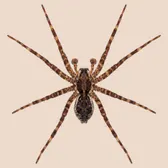
Similar in size, but mottled gray brown overall rather than dark brown with the six-spotted fishing spider's neat rows of small white spots and pale carapace stripe, and it wanders far from water more often.
Questions
Is the Six-spotted fishing spider dangerous to people?
Not aggressive and quick to flee into the water rather than confront people; bites are rare and not medically significant.
When can you see the Six-spotted fishing spider?
The Six-spotted fishing spider can be seen from March to October, by day.
Plate retouched from a photo by Bex Goreham, CC BY 4.0, iNaturalist Licence
Report a mistake in this entry
Spiders›Nursery web spiders›Dolomedes
Last updated 2026-09-27. Every entry is checked against published sources.