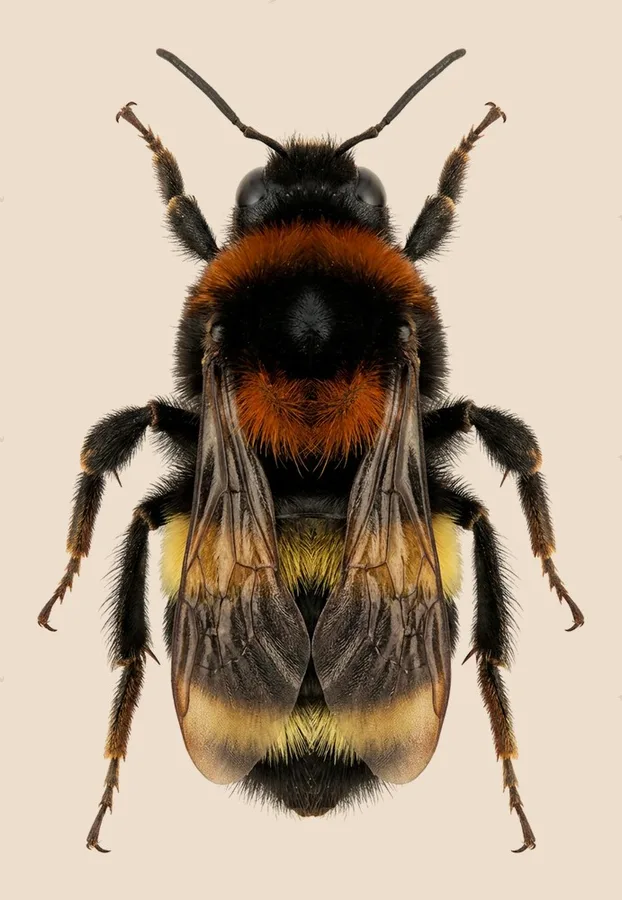
Red-belted bumble bee
Its colour pattern is so variable that dozens of separate forms were once described before entomologists realised they were all one species.
| Where | Open grassland, parks and gardens |
|---|---|
| Size | 11 to 18 mm body length |
| When | May to September |
The Red-belted bumble bee is a small, short-haired bumble bee with a notably round face and a crescent of yellow hair on the second abdominal segment. About three-quarters of individuals also show patches of red on the abdomen.
Queens found new colonies each spring in open grassland, parks and gardens, and the species is an important pollinator of blueberry and other short-tongued-friendly flowers. Workers can sting more than once if the nest is disturbed.
Traits
Habitat
Grassland
Colour
Black, Yellow, Red
Active
Day
To people
Take care
Workers can sting more than once if their nest is disturbed, though they rarely sting while visiting flowers.
Activity through the year
Often confused with
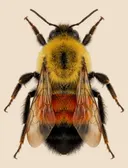
Where red is present it forms a solid band across two abdominal segments, while the Red-belted bumble bee's red patches are brighter but more limited and often mixed with yellow.
Questions
Is the Red-belted bumble bee dangerous to people?
Take care. Workers can sting more than once if their nest is disturbed, though they rarely sting while visiting flowers.
When can you see the Red-belted bumble bee?
The Red-belted bumble bee can be seen from May to September, by day.
Plate retouched from a photo by pamelah175, CC BY 4.0, iNaturalist Licence
Report a mistake in this entry
Bees, wasps and ants›Bees and bumblebees›Bombus
Last updated 2026-09-27. Every entry is checked against published sources.