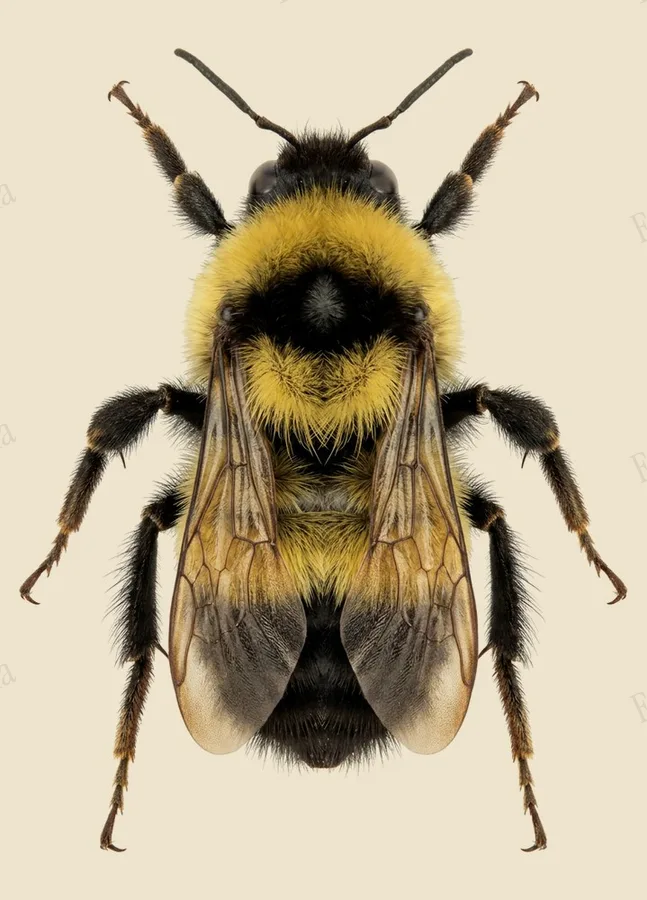
Perplexing bumble bee
Its colonies are short-lived: workers appear by late May, numbers are already thinning by June or July, and the species grows scarce by September.
| Where | Woodland edges with flowering shrubs |
|---|---|
| Size | 12 to 21 mm body length |
| When | April to August |
The Perplexing bumble bee has golden, egg-yolk yellow hair across the top of the thorax with black hair below the wing bases, and a black and yellow abdomen. Queens are noticeably larger than workers and males.
Queens emerge from hibernation in late March to found new colonies in woodland edges where blackberries and other shrubs are flowering. Workers and queens can sting if handled or if their nest is disturbed.
Traits
Habitat
Woodland
Colour
Black, Yellow, Orange
Active
Day
To people
Mild
Queens and workers can sting if handled or if their nest is disturbed, but they rarely bother people while foraging.
Activity through the year
Often confused with
Has pale yellow hair with a black patch between the wings, while the Perplexing bumble bee's hair is a darker, more orange-tinted yellow without that black patch.
Questions
Is the Perplexing bumble bee dangerous to people?
Mild. Queens and workers can sting if handled or if their nest is disturbed, but they rarely bother people while foraging.
When can you see the Perplexing bumble bee?
The Perplexing bumble bee can be seen from April to August, by day.
Plate retouched from a photo by soo_moths, CC0, iNaturalist Licence
Report a mistake in this entry
Bees, wasps and ants›Bees and bumblebees›Bombus
Last updated 2026-09-27. Every entry is checked against published sources.