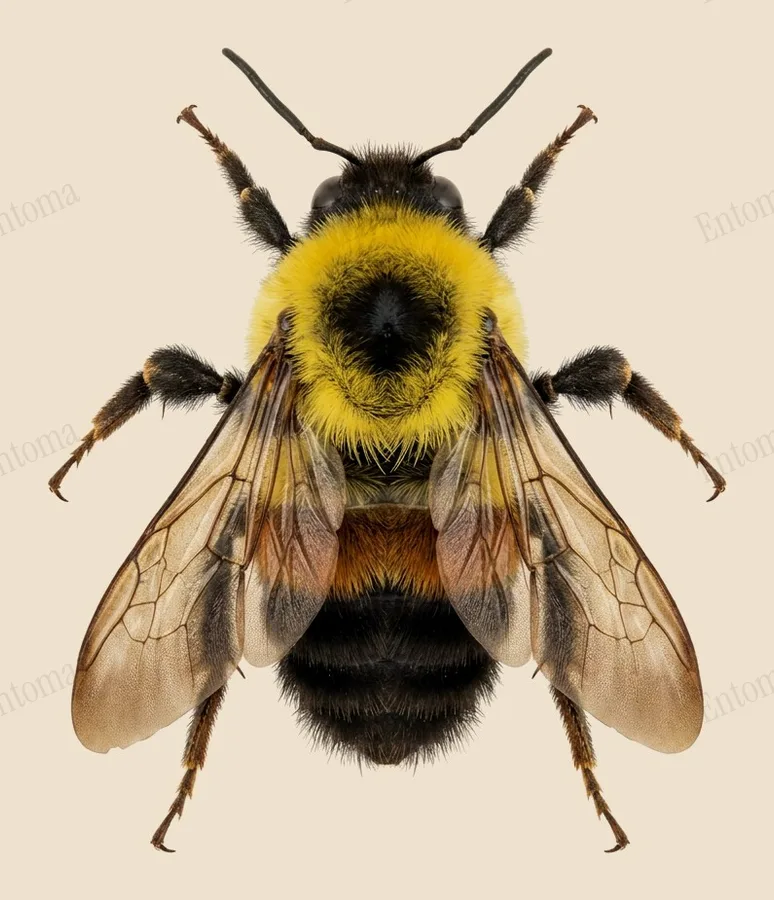
Brown-belted bumble bee
Brown-belted Bumble Bee workers sometimes smear an intruder in honey from the nest, a sticky defense that slows the attacker down.
| Where | Farmland, gardens, parks and woodland edges |
|---|---|
| Size | 10 to 23 mm body length |
| When | May to September |
Workers and queens show a rust-brown, crescent-shaped patch of hair on the second abdominal segment, a mark absent in most other North American bumble bees; queens measure about 18 to 23 millimeters and workers about 10 to 16 millimeters long.
Colonies are usually small, often fewer than 50 workers, nesting underground or occasionally on the surface in old grass clumps, and researchers describe this species as unusually calm, rarely stinging unless its nest is directly threatened.
Traits
Habitat
Farmland
Colour
Black, Yellow, Brown
Active
Day
To people
Mild
Described as unusually calm for a bumble bee; stings are uncommon and occur mainly when the nest is directly threatened.
Activity through the year
Often confused with
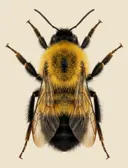
Lacks the Brown-belted Bumble Bee's rust-brown patch on the second abdominal segment; its abdomen is plain black beyond the first yellow band.
Questions
Is the Brown-belted bumble bee dangerous to people?
Mild. Described as unusually calm for a bumble bee; stings are uncommon and occur mainly when the nest is directly threatened.
When can you see the Brown-belted bumble bee?
The Brown-belted bumble bee can be seen from May to September, by day.
Plate retouched from a museum specimen photo by Virginia Tech, Department of Entomology, Virginia Tech Insect Collection, CC0, GBIF Licence
Report a mistake in this entry
Bees, wasps and ants›Bees and bumblebees›Bombus
Last updated 2026-09-26. Every entry is checked against published sources.