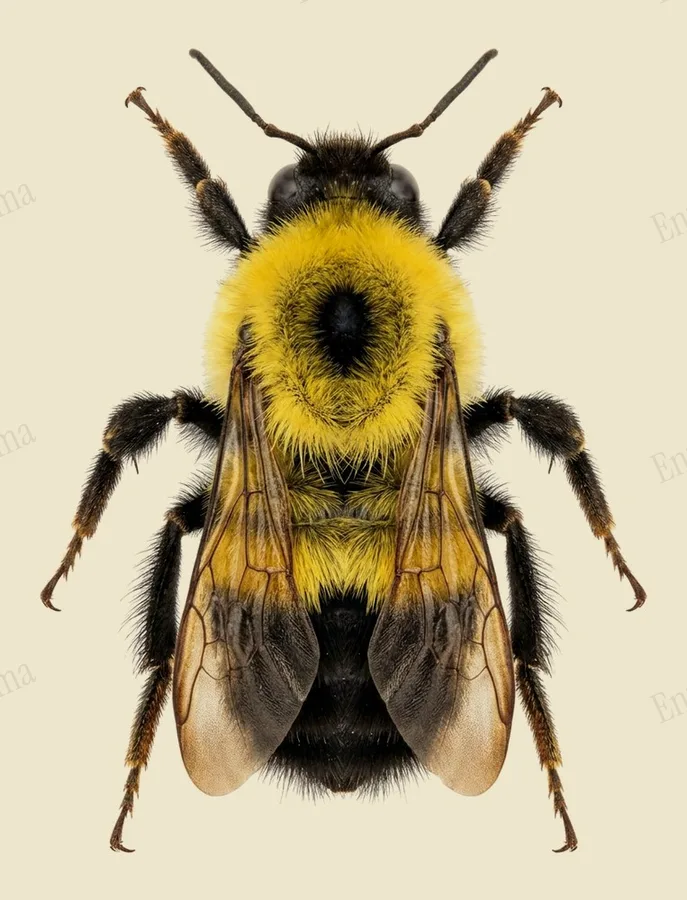
Two-spotted bumble bee
The two dark patches that name this bumble bee sit in the corners of its second abdominal segment, and on some individuals they are barely visible at all.
| Where | Gardens, meadows and woodland edges |
|---|---|
| Size | 10 to 22 mm body length |
| When | April to August |
Workers and queens have a yellow first abdominal segment and a yellow second segment marked with two dark patches at the corners, while the third segment is usually black. Body length runs from about 10 mm in workers up to 22 mm in queens.
A single mated queen starts each colony alone in spring, and by autumn the workers and males die off while new queens overwinter underground to begin the cycle again the next year.
Traits
Habitat
Garden
Colour
Black, Yellow
Active
Day
To people
Mild
Docile and rarely aggressive; stings only if handled or its nest is disturbed.
Activity through the year
Often confused with
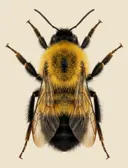
Workers show clean black hair on the sides of the second abdominal segment, without the mix of yellow and black hairs found in the Two-spotted bumble bee.
Questions
Is the Two-spotted bumble bee dangerous to people?
Mild. Docile and rarely aggressive; stings only if handled or its nest is disturbed.
When can you see the Two-spotted bumble bee?
The Two-spotted bumble bee can be seen from April to August, by day.
Plate retouched from a museum specimen photo by Virginia Tech, Department of Entomology, Virginia Tech Insect Collection, CC0, GBIF Licence
Report a mistake in this entry
Bees, wasps and ants›Bees and bumblebees›Bombus
Last updated 2026-09-26. Every entry is checked against published sources.