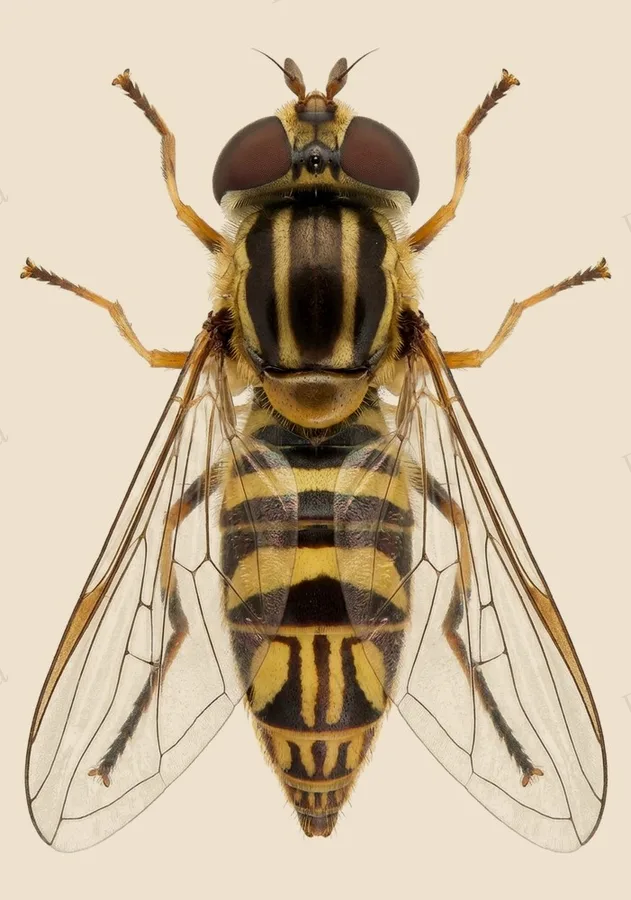
Oblique streaktail
A single larva of this small hover fly can eat more than two hundred aphids before it finishes growing, making it a useful garden predator.
| Where | Gardens, fields and flowering plants |
|---|---|
| Size | 6 to 9 mm body length |
| When | March to December |
The oblique streaktail is a small hover fly with a black body crossed by yellow bands and stripes, including oblique yellow dashes on the abdomen that give it its name. It mimics the look of a small bee but has large rounded eyes, short antennae and only one pair of wings.
Females lay eggs near aphid colonies, and the pale green, white striped larvae feed entirely on aphids, eating well over two hundred before they finish developing. Adults visit garden flowers for nectar and pollen throughout the warmer months.
Traits
Habitat
Garden
Colour
Yellow, Black
Active
Day
To people
Visits garden flowers and mimics a bee, but has no sting; harmless to people.
Activity through the year
Often confused with
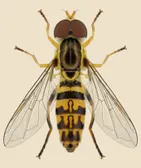
A similarly patterned yellow and black hover fly, but it has a small pointed notch at the back of each eye that the Oblique streaktail lacks.
Questions
Is the Oblique streaktail dangerous to people?
Visits garden flowers and mimics a bee, but has no sting; harmless to people.
When can you see the Oblique streaktail?
The Oblique streaktail can be seen from March to December, by day.
Plate retouched from a photo by Catherine C. Galley, CC BY 4.0, iNaturalist Licence
Report a mistake in this entry
Last updated 2026-09-27. Every entry is checked against published sources.