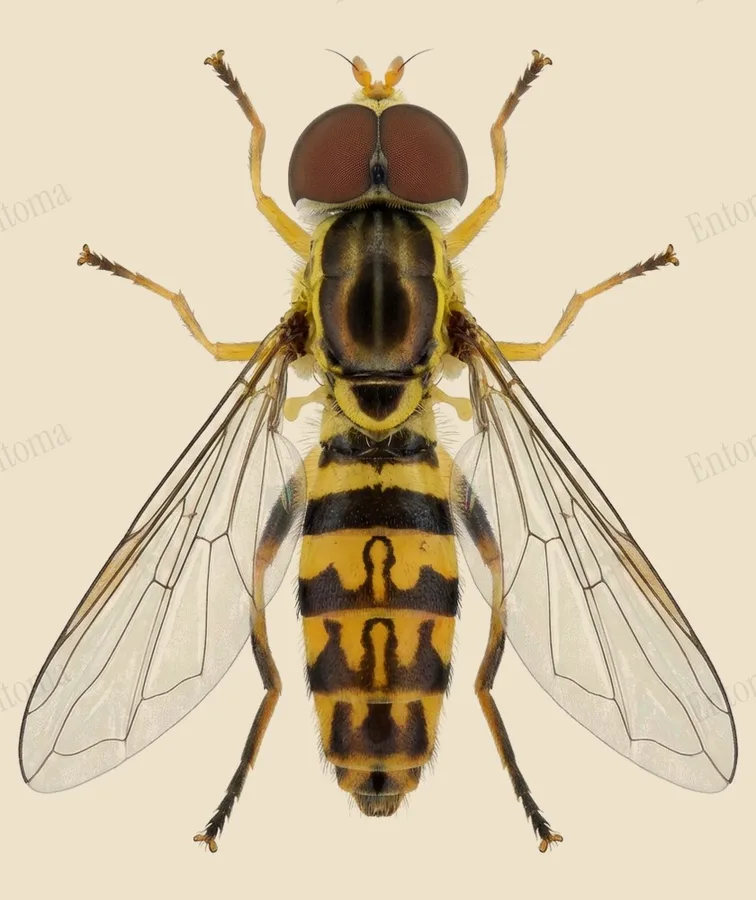
Eastern calligrapher
This fly's black and yellow pattern mimics a stinging wasp so well that it fools predators, yet it has no stinger and cannot sting or bite people.
| Where | Gardens, fields and flowering meadows |
|---|---|
| Size | 6 to 8 mm body length |
| When | April to October |
The eastern calligrapher is a small hover fly with a black and yellow patterned abdomen that mimics the warning colors of stinging bees and wasps, though it has only two wings and no sting. Its dark abdominal markings extend to the edge of the abdomen, unlike the continuous yellow border of the similar margined calligrapher.
Adults visit large, flat, pale flowers for pollen and nectar, and males hover in open air to attract mates. Larvae feed on aphids and mites, making the species useful in gardens, and adults are seen from spring through fall.
Traits
Habitat
Garden
Colour
Black, Yellow
Active
Day
To people
Cannot sting or bite; it only looks like a wasp, and its larvae feed on garden aphids.
Activity through the year
Often confused with
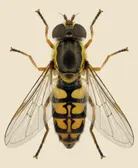
Has a narrow yellow margin running all around its shining black abdomen, while the eastern calligrapher's dark abdominal pattern extends to the edge without a continuous yellow border.
Questions
Is the Eastern calligrapher dangerous to people?
Cannot sting or bite; it only looks like a wasp, and its larvae feed on garden aphids.
When can you see the Eastern calligrapher?
The Eastern calligrapher can be seen from April to October, by day.
Plate retouched from a photo by Ryan Hodnett, CC BY‑SA 4.0, iNaturalist Licence
The plate on this page is shared under the same licence as its source, CC BY-SA.
Report a mistake in this entry
Last updated 2026-09-26. Every entry is checked against published sources.