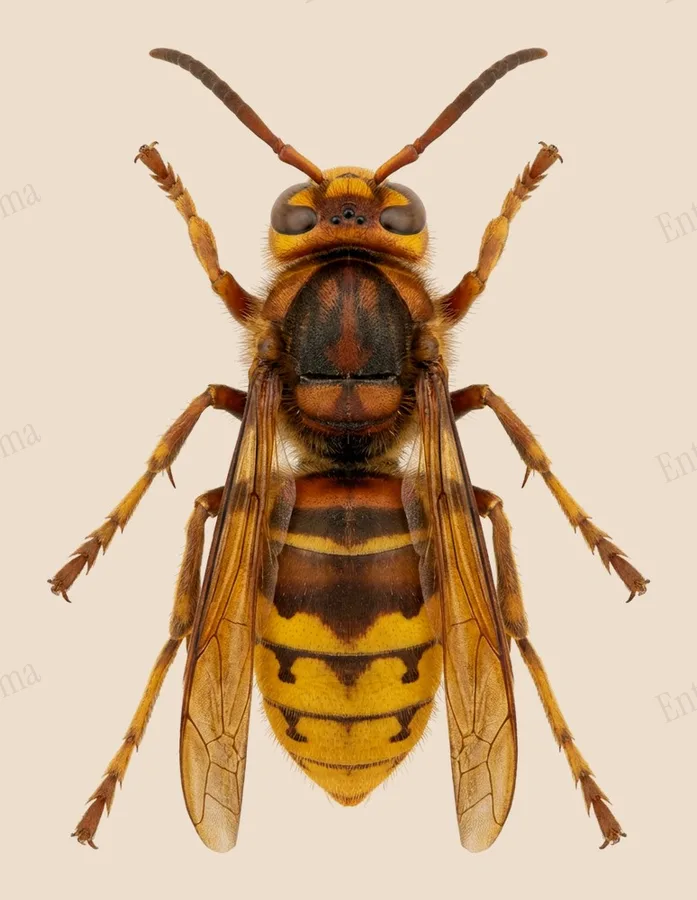
Yellow hornet
This hornet is blamed for more recorded stinging injuries in Japan than any other single species, including the much larger giant hornet.
| Where | Urban eaves, attics and forest edges |
|---|---|
| Size | 17 to 28 mm body length |
| When | May to November |
Workers measure about 17 to 24 mm and queens up to 28 mm, with a yellow head, a black thorax marked with yellow shoulder patches, and a dark brown abdomen banded with yellow. It builds large, rounded paper nests that can exceed a meter across inside enclosed spaces such as roof cavities.
Colonies are highly adapted to towns and cities, often nesting in house eaves, attics and wall cavities, and will sometimes move the whole nest to a new site in mid summer. Workers defend the nest aggressively and will attack together in a group if it is disturbed.
Traits
Habitat
Towns
Colour
Yellow, Black, Brown
Active
Day
To people
Dangerous
Females, both workers and queens, can sting repeatedly and defend the nest as a group; most hospital-treated hornet stings in Japan are blamed on this species.
Activity through the year
Often confused with
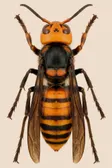
Much larger, with a broad orange-yellow head and a deeply notched clypeus, compared to the smaller Yellow hornet's mostly black and yellow-banded thorax.
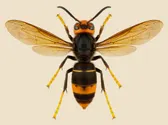
Has a velvety dark brown to black body with distinctly yellow-tipped legs, unlike the more evenly yellow-patterned head and thorax of the Yellow hornet.
Questions
Is the Yellow hornet dangerous to people?
Dangerous. Females, both workers and queens, can sting repeatedly and defend the nest as a group; most hospital-treated hornet stings in Japan are blamed on this species.
When can you see the Yellow hornet?
The Yellow hornet can be seen from May to November, by day.
Plate retouched from a photo by violalarson, CC0, iNaturalist Licence
Report a mistake in this entry
Bees, wasps and ants›Wasps and hornets›Vespa
Last updated 2026-09-27. Every entry is checked against published sources.