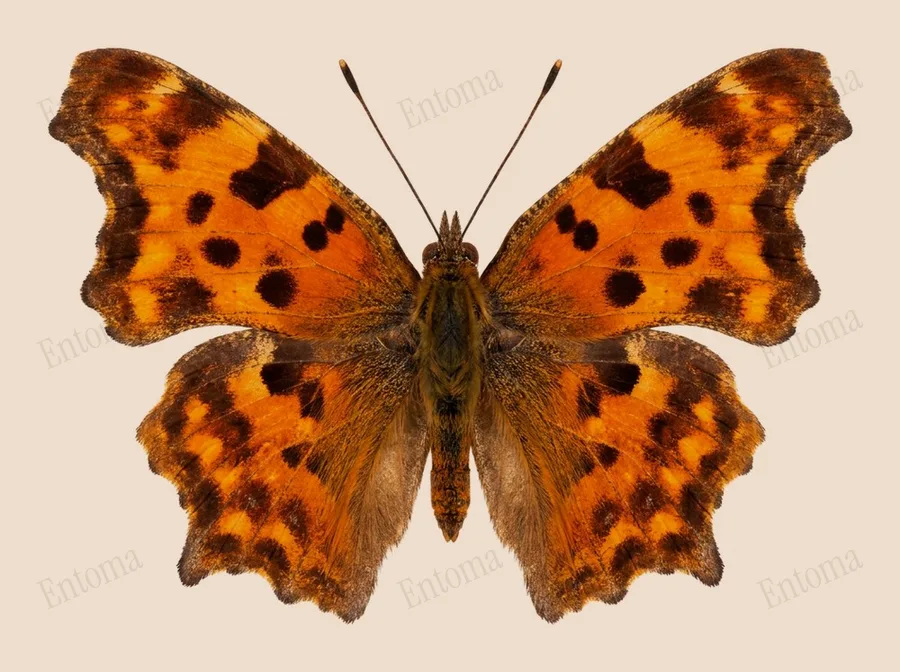
Asian comma
This butterfly is named for a small, shiny golden comma-shaped mark on the underside of each hindwing, visible only when the wings are closed.
| Where | Suburban grassland, riverbanks and gardens |
|---|---|
| Size | 25 to 30 mm forewing length |
| When | March to November |
The Asian comma has bright orange upperwings dotted with black spots and finely scalloped, ragged wing margins; a small golden comma-shaped mark sits on the mottled brown, bark-like underside of each hindwing. Forewing length is about 25 to 30 mm; the summer form is paler and more yellowish than the vivid orange autumn form.
Adults feed on tree sap and flower nectar rather than relying on one food source, and caterpillars develop on Japanese hop (Humulus japonicus) in open grassland, riverbanks and suburban gardens across Japan, Korea, China and Taiwan.
Traits
Habitat
Garden
Colour
Orange, Black, Brown
Active
Day
To people
Harmless to people; a common garden butterfly with no defensive spines or hairs.
Activity through the year
Often confused with
Very similar ragged orange wings and a hindwing comma mark, but the Comma has a white or silvery mark rather than the golden mark that gives the Asian comma its name, and lacks the bluish markings on the hindwing underside.
Questions
Is the Asian comma dangerous to people?
Harmless to people; a common garden butterfly with no defensive spines or hairs.
When can you see the Asian comma?
The Asian comma can be seen from March to November, by day.
Plate retouched from a museum specimen photo by Swiss Natural History Collections - SwissNatColl, CC BY 4.0, GBIF Licence
Report a mistake in this entry
Butterflies and moths›Brush-footed butterflies›Polygonia
Last updated 2026-09-27. Every entry is checked against published sources.