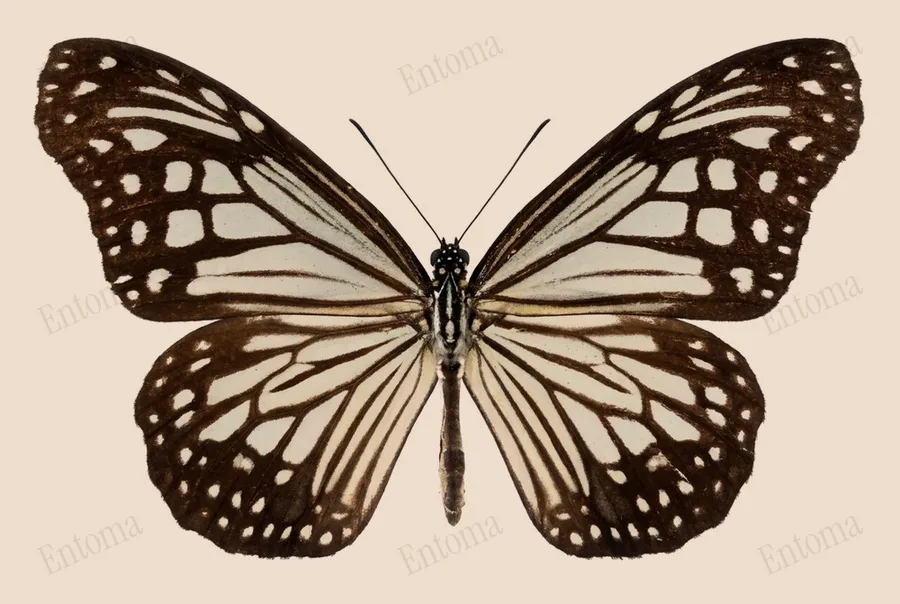
Glassy tiger
Adult males of this butterfly seek out withered plants that ooze toxic fluids, and drinking these fluids helps make the butterflies unpalatable to predators.
| Where | Gardens, scrubland and forest edges |
|---|---|
| Size | 70 to 100 mm wingspan |
| When | January to December |
The Glassy tiger has dark brownish black wings patterned with translucent, glassy white streaks and spots, giving the wings a semi transparent appearance in flight.
Caterpillars feed on Apocynaceae vines such as Ceropegia and Tylophora species, and adult males visit withered plants to drink toxic fluids that make them unpalatable to bird predators, flying through gardens, scrubland and forest edges.
Traits
Habitat
Garden
Colour
Black, White
Active
Day
To people
Mild
Feeds on toxic plant fluids as an adult, which keeps it unpalatable to predators; safe to touch.
Activity through the year
Often confused with
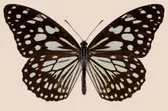
Similar sized but darker overall, with narrow bluish white streaks and lines rather than the bold glassy white patches of the Glassy tiger.
Questions
Is the Glassy tiger dangerous to people?
Mild. Feeds on toxic plant fluids as an adult, which keeps it unpalatable to predators; safe to touch.
When can you see the Glassy tiger?
The Glassy tiger can be seen from January to December, by day.
Plate retouched from a photo by mnauky, CC BY 4.0, iNaturalist Licence
Report a mistake in this entry
Butterflies and moths›Brush-footed butterflies›Parantica
Last updated 2026-09-27. Every entry is checked against published sources.