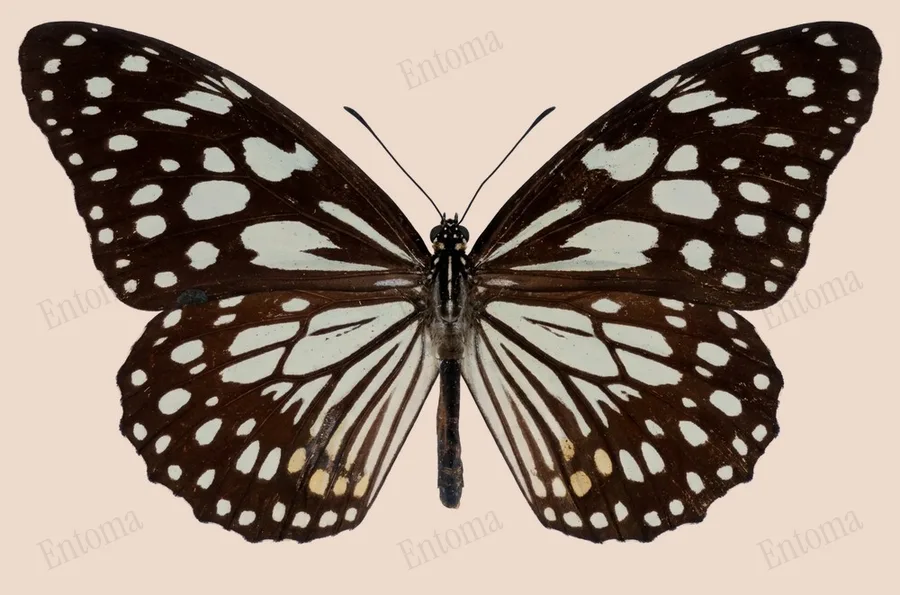
Blue tiger
This butterfly forms dense overnight roosts of hundreds of individuals together with other toxic milkweed butterflies on the same trees, night after night through the dry season.
| Where | Forested hills across South and Southeast Asia |
|---|---|
| Size | 75 to 106 mm wingspan |
| When | April to February |
The blue tiger has dark brown to black wings marked with bluish white, semi transparent streaks and spots, including two streaks in the forewing cell that run together into one another. Wingspan measures 75 to 106 mm, with males smaller than females.
Caterpillars feed only on milkweed family vines and shrubs such as Tylophora and Marsdenia, sequestering toxic compounds from the leaves that make the adults distasteful, and adults gather at flowering Crotalaria and other plants, sometimes migrating in large numbers.
Traits
Habitat
Woodland
Colour
Black, Blue, Brown
Active
Day
To people
Mild
Distasteful to predators after feeding on toxic milkweed plants as a caterpillar; safe to handle.
Activity through the year
Often confused with
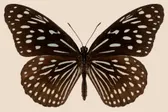
The two bluish white streaks in forewing cell space 1 stay separate rather than joining into one, and the ground colour is darker with bluer, more strongly marked spots.
Questions
Is the Blue tiger dangerous to people?
Mild. Distasteful to predators after feeding on toxic milkweed plants as a caterpillar; safe to handle.
When can you see the Blue tiger?
The Blue tiger can be seen from April to February, by day.
Plate retouched from a photo by mnauky, CC BY 4.0, iNaturalist Licence
Report a mistake in this entry
Butterflies and moths›Brush-footed butterflies›Tirumala
Last updated 2026-09-27. Every entry is checked against published sources.