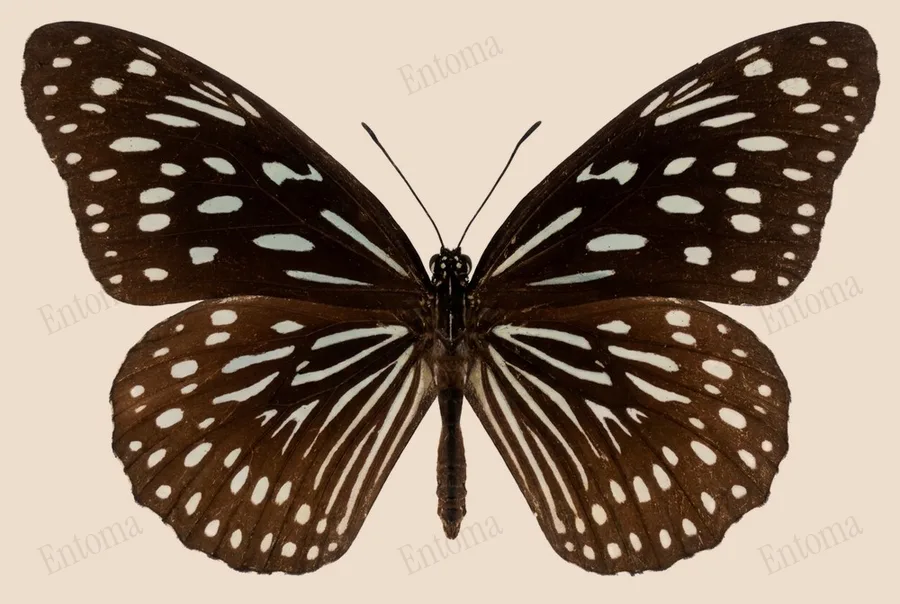
Dark blue tiger
Its caterpillars feed on toxic climbing vines and the adults range through evergreen forest up to 2000 metres, from Himalayan foothills to southern India.
| Where | Evergreen forest and hill slopes |
|---|---|
| Size | 80 to 115 mm wingspan |
| When | January to December |
The Dark blue tiger is patterned in blackish brown with rows of pale, bluish white streaks and spots across both wings, giving a darker and bluer impression than its close relatives. Males carry a black scent patch near the base of the hindwing.
Large numbers gather during the monsoon migration in southern India, flying alongside other milkweed butterflies between the hills and the plains. Caterpillars feed on climbing plants such as Cocculus and Cosmostigma, taking in plant chemicals that most predators learn to avoid.
Traits
Habitat
Woodland
Colour
Black, Blue, White
Active
Day
To people
Harmless to people; the caterpillars store plant chemicals that most birds learn to avoid.
Activity through the year
Often confused with
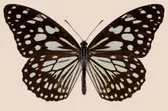
The Blue tiger is paler overall, with broader, more washed out bluish white markings and a golden brown tinge on the underside, lacking the crisper, bluer streaks of the Dark blue tiger.
Questions
Is the Dark blue tiger dangerous to people?
Harmless to people; the caterpillars store plant chemicals that most birds learn to avoid.
When can you see the Dark blue tiger?
The Dark blue tiger can be seen from January to December, by day.
Plate retouched from a photo by mnauky, CC BY 4.0, iNaturalist Licence
Report a mistake in this entry
Butterflies and moths›Brush-footed butterflies›Tirumala
Last updated 2026-09-27. Every entry is checked against published sources.