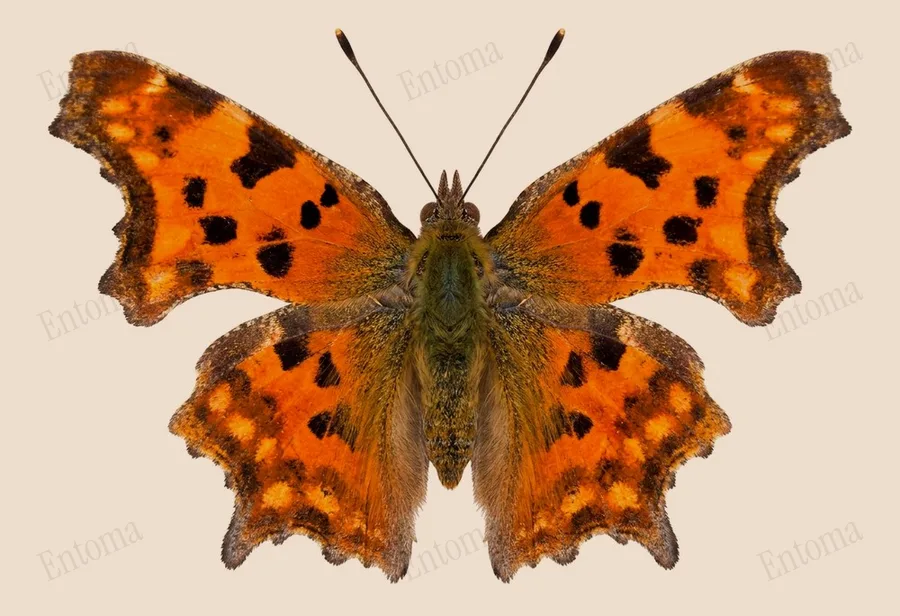
European comma
It is named for a small white comma-shaped mark on the underside of its hindwing, the only clue to its identity when the ragged wings are closed.
| Where | Woodland edges, hedgerows, gardens |
|---|---|
| Size | 55 to 60 mm wingspan |
| When | March to October |
The upper wings are orange-brown with dark blotches and deeply scalloped, ragged edges, quite unlike the smooth outline of most other butterflies.
Adults hibernate over winter as adults, tucked into hollow trees, log piles or sheds, and emerge on mild days from very early spring.
Traits
Habitat
Garden
Colour
Orange, Brown
Active
Day
To people
Harmless
Activity through the year
Often confused with
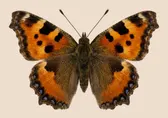
The large tortoiseshell lacks the comma's ragged wing outline and is a plainer, less scalloped orange-brown.
Questions
Is the European comma dangerous to people?
The European comma is harmless to people.
When can you see the European comma?
The European comma can be seen from March to October, by day.
Plate retouched from a photo by Reinhold Stansich, CC BY‑SA 2.5, Wikimedia Commons Licence
The plate on this page is shared under the same licence as its source, CC BY-SA.
Report a mistake in this entry
Butterflies and moths›Brush-footed butterflies›Polygonia
Last updated 2026-09-26. Every entry is checked against published sources.