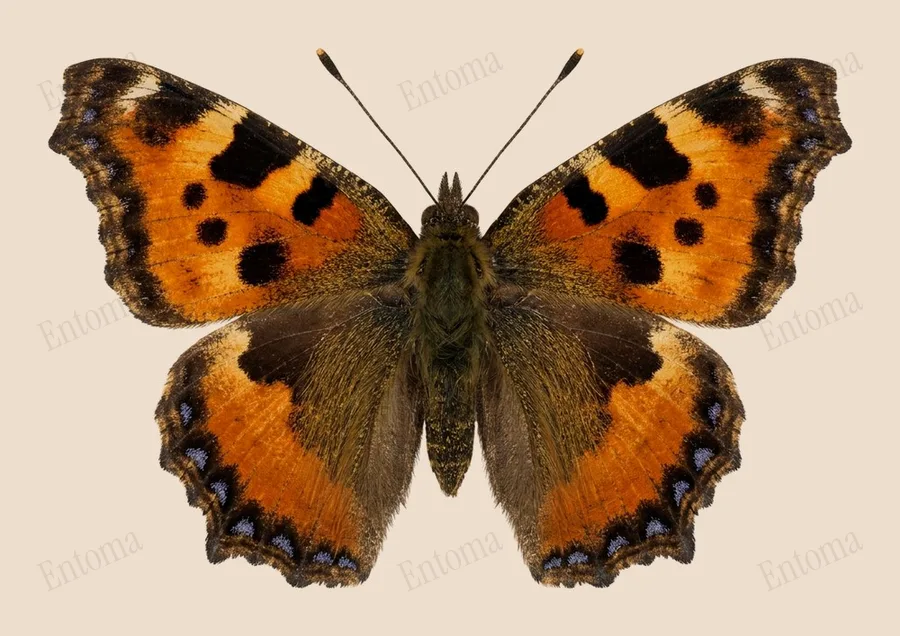
Large tortoiseshell
This butterfly survives winter as a fully grown adult hidden in trees or sheds, letting it emerge and breed as soon as spring warms.
| Where | Woodland edges and wooded lanes |
|---|---|
| Size | 68 to 75 mm wingspan |
| When | February to July |
The Large tortoiseshell has orange wings with black and yellow patches and a border of blue spotted lunules, similar to the Small tortoiseshell but larger and duller, without the white mark near the forewing tip.
It is on the wing from February to July, hibernating as an adult through winter and breeding in spring around woodland edges and wooded lanes. Caterpillars feed mainly on elm, and numbers fell sharply after Dutch elm disease reduced the trees.
Traits
Habitat
Woodland
Colour
Orange, Black
Active
Day
To people
Rare and declining; harmless to people.
Activity through the year
Often confused with
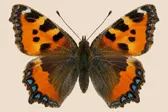
Noticeably smaller at about 45 to 62 mm wingspan, more reddish orange with more black on the hindwing, and with a small white mark near the forewing tip that the Large tortoiseshell lacks.
Questions
Is the Large tortoiseshell dangerous to people?
Rare and declining; harmless to people.
When can you see the Large tortoiseshell?
The Large tortoiseshell can be seen from February to July, by day.
Plate retouched from a photo by Romzig, CC0, Wikimedia Commons Licence
Report a mistake in this entry
Butterflies and moths›Brush-footed butterflies›Nymphalis
Last updated 2026-09-26. Every entry is checked against published sources.