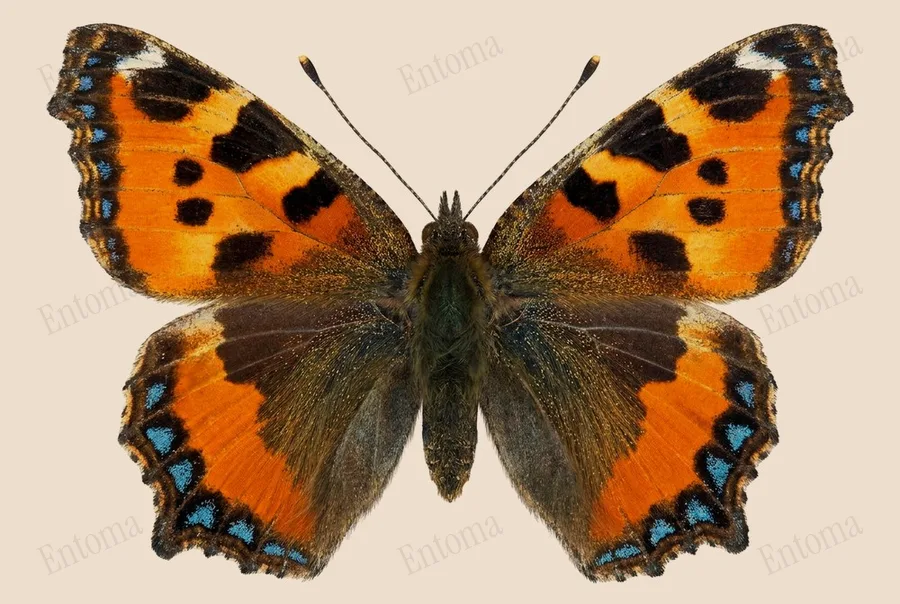
Small tortoiseshell
It can supercool its body and survive temperatures down to about minus 21 Celsius while hibernating as an adult in sheds and hollow trees.
| Where | Gardens, hedgerows, meadows, woodland edges |
|---|---|
| Size | 45 to 62 mm wingspan |
| When | March to September |
It is a bright orange butterfly with black and yellow blocks along the forewing and a row of blue crescents around the wing edges.
Adults hibernate over winter and caterpillars feed together in a communal web on common nettle before dispersing to feed alone.
Traits
Habitat
Garden
Colour
Orange, Black, Yellow
Active
Day
To people
Harmless
Activity through the year
Often confused with
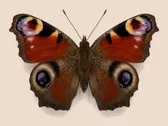
The peacock has large eyespots on all four wings, while the small tortoiseshell has none, showing blue crescents along the margins instead.
Questions
Is the Small tortoiseshell dangerous to people?
The Small tortoiseshell is harmless to people.
When can you see the Small tortoiseshell?
The Small tortoiseshell can be seen from March to September, by day.
Plate retouched from a photo by Didier Descouens, CC BY‑SA 4.0, Wikimedia Commons Licence
The plate on this page is shared under the same licence as its source, CC BY-SA.
Report a mistake in this entry
Butterflies and moths›Brush-footed butterflies›Aglais
Last updated 2026-09-26. Every entry is checked against published sources.