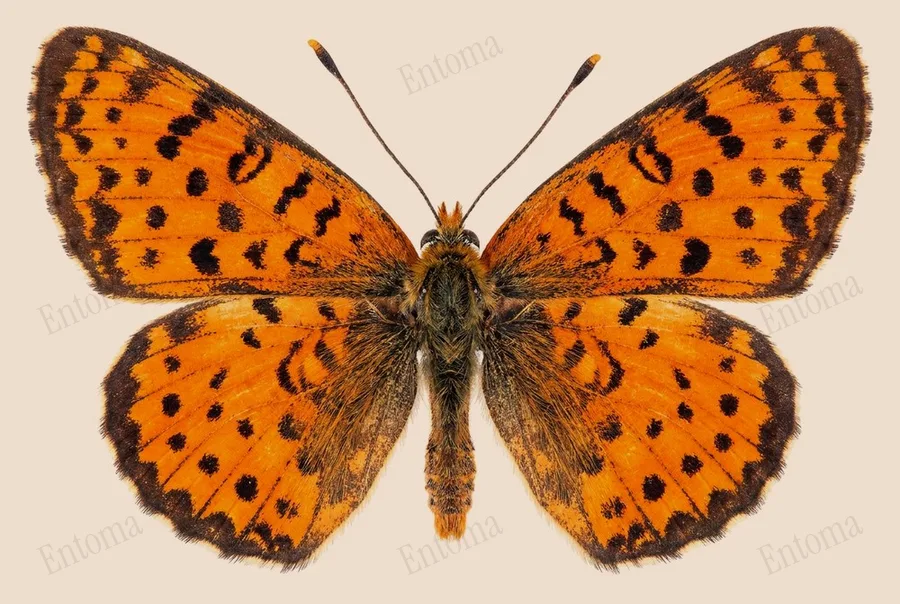
Spotted fritillary
Depending on climate and altitude, the spotted fritillary can complete just one generation in cool mountains or as many as three in warm lowlands each year.
| Where | Grassland, meadows and roadsides |
|---|---|
| Size | 35 to 50 mm wingspan |
| When | May to September |
The spotted fritillary is a variable orange to orange red butterfly with rows of dark brown spots and bars across both wings; females are often duller and shaded with grey green. The underside is chequered in pale yellow and orange, and the wingspan usually falls between 35 and 50 mm.
Caterpillars feed on toadflax, speedwell, plantain and foxglove, sheltering through winter as a small larva before resuming growth in spring. Adults fly over flowery meadows and grassy roadsides from spring into autumn, with warmer regions producing extra generations.
Traits
Habitat
Grassland
Colour
Orange, Brown, Grey
Active
Day
To people
Visits flowers for nectar in open grassland; not known to bite or sting people.
Activity through the year
Often confused with
Similar in size at 34 to 50 mm, but the knapweed fritillary tends to show a paler orange ground colour with heavier dark checkering, and the two often need close study of the underside pattern to separate with confidence.
Questions
Is the Spotted fritillary dangerous to people?
Visits flowers for nectar in open grassland; not known to bite or sting people.
When can you see the Spotted fritillary?
The Spotted fritillary can be seen from May to September, by day.
Plate retouched from a photo by Didier Descouens, CC BY‑SA 4.0, Wikimedia Commons Licence
The plate on this page is shared under the same licence as its source, CC BY-SA.
Report a mistake in this entry
Butterflies and moths›Brush-footed butterflies›Melitaea
Last updated 2026-09-26. Every entry is checked against published sources.