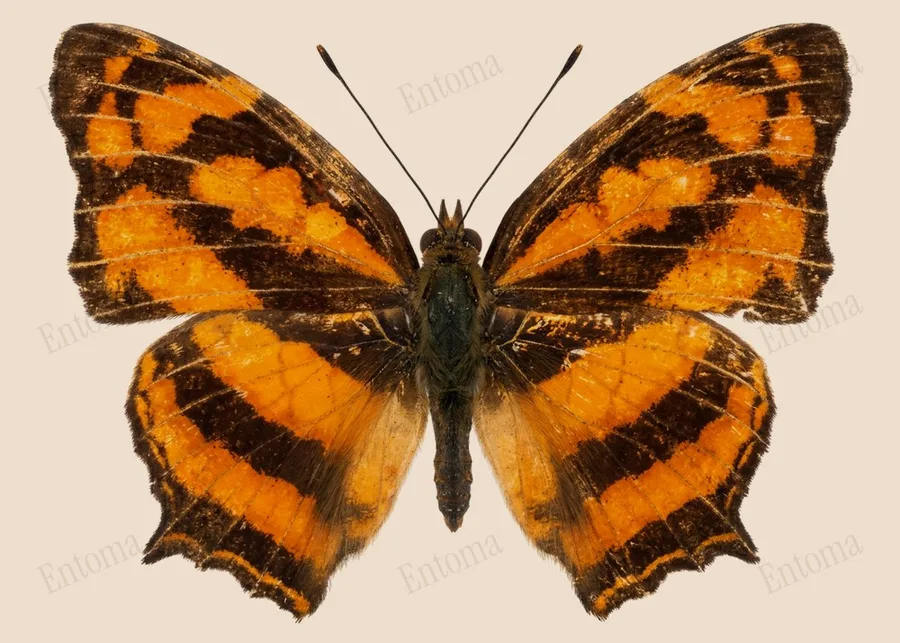
Common jester
The club shaped black streak on the forewing that gives this jester butterfly its pattern occurs across many colour forms in a taxonomically confusing species complex.
| Where | Forests and forest edges |
|---|---|
| Size | 34 to 40 mm wingspan |
| When | January to December |
The Common jester has black wings marked with bold orange yellow bands and a club shaped black streak in the forewing cell, with females showing broader, paler orange markings than males.
The genus forms a confusing complex of regional colour forms, and adults are usually seen flying low along forest paths and forest edges.
Traits
Habitat
Woodland
Colour
Black, Orange, Yellow
Active
Day
To people
Visits sunlit paths and forest edges; not known to bite or sting people.
Activity through the year
Often confused with
Named for its rounder spotted markings rather than the club shaped streak in the forewing cell that identifies the Common jester.
Questions
Is the Common jester dangerous to people?
Visits sunlit paths and forest edges; not known to bite or sting people.
When can you see the Common jester?
The Common jester can be seen from January to December, by day.
Plate retouched from a photo by mnauky, CC BY 4.0, iNaturalist Licence
Report a mistake in this entry
Butterflies and moths›Brush-footed butterflies›Symbrenthia
Last updated 2026-09-27. Every entry is checked against published sources.