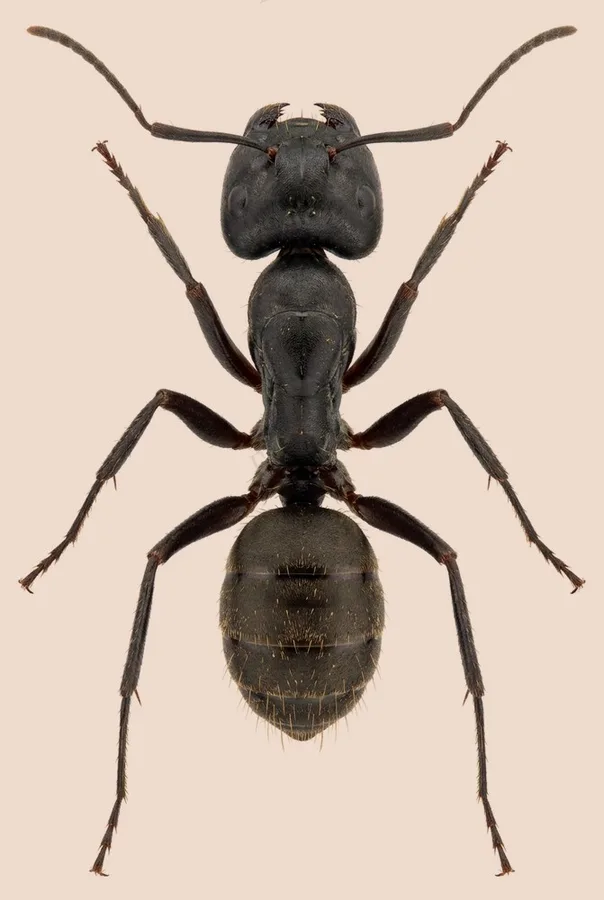
Japanese carpenter ant
Workers of this jet black ant come in three size classes from one nest, and the largest majors can measure twice the length of the smallest workers.
| Where | Gardens, woodland and residential areas |
|---|---|
| Size | 6 to 13 mm body length (workers) |
| When | April to October |
The Japanese carpenter ant is entirely jet black and one of the largest ants in East Asia, with polymorphic workers ranging from about 6 to 13 mm and larger queens; it nests in dead wood, stumps and soil under logs.
Colonies forage by day for insects, honeydew and other food across gardens, woodland and residential areas from spring into autumn, and workers will bite in defence of the nest when disturbed.
Traits
Habitat
Towns
Colour
Black
Active
Day
To people
Mild
Workers will bite in defence of the nest, but the bite is mild and not dangerous to people.
Activity through the year
Often confused with
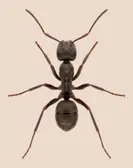
Noticeably smaller, with workers about 4 to 6 mm long against 6 to 13 mm in the Japanese carpenter ant, and a thorax that forms two gentle humps in profile rather than the single smooth arc of the Japanese carpenter ant.
Questions
Is the Japanese carpenter ant dangerous to people?
Mild. Workers will bite in defence of the nest, but the bite is mild and not dangerous to people.
When can you see the Japanese carpenter ant?
The Japanese carpenter ant can be seen from April to October, by day.
Plate retouched from a photo by Franz Anthony, CC BY 4.0, iNaturalist Licence
Report a mistake in this entry
Bees, wasps and ants›Ants›Camponotus
Last updated 2026-09-27. Every entry is checked against published sources.