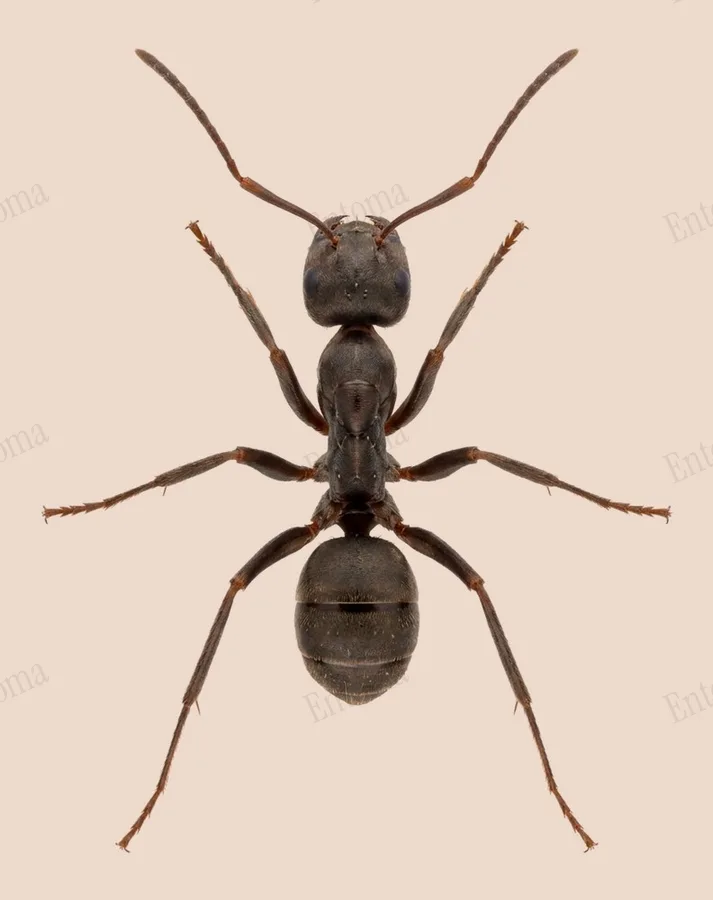
Japanese wood ant
This ant cannot sting, but defends itself by biting with its jaws and then spraying formic acid from the tip of its abdomen into the wound.
| Where | Open soil in grassland and parks |
|---|---|
| Size | 4 to 6 mm body length |
| When | March to October |
The Japanese wood ant is a small ant, its workers about 4 to 6 mm long, with a dull, light grey to brownish black body lacking a shine. It nests in open, sun-exposed soil in grassland and parks, digging burrows that can reach roughly a meter deep.
Colonies feed mainly on honeydew from aphids, nectar and dead insects, and workers defend the nest by biting with their jaws and spraying irritating formic acid from the tip of the abdomen rather than using a sting.
Traits
Habitat
Grassland
Colour
Grey, Black
Active
Day
To people
Mild
Bites with its jaws and sprays irritating formic acid rather than stinging; the spray can mildly irritate skin.
Activity through the year
Often confused with
Very similar in appearance and habitat, reliably told apart only by fine details of head shape and antennal length in males; researchers have even found that populations of the Japanese wood ant itself differ enough in body chemistry to suggest hidden sibling species.
Questions
Is the Japanese wood ant dangerous to people?
Mild. Bites with its jaws and sprays irritating formic acid rather than stinging; the spray can mildly irritate skin.
When can you see the Japanese wood ant?
The Japanese wood ant can be seen from March to October, by day.
Plate retouched from a photo by WATANABE Hitoshi 渡辺仁, CC BY 4.0, iNaturalist Licence
Report a mistake in this entry
Bees, wasps and ants›Ants›Formica
Last updated 2026-09-27. Every entry is checked against published sources.