| Dragonfly | Damselfly | |
|---|---|---|
| Wings at rest | Held out to the sides | Folded along the body |
| Eyes | Very large, close together | Smaller, with a gap between them |
| Body | Chunky and short | Long and thin |
| Wing shape | Hindwings broader at the base than the forewings | Front and back wings alike, narrow where they join the body |
Four field marks
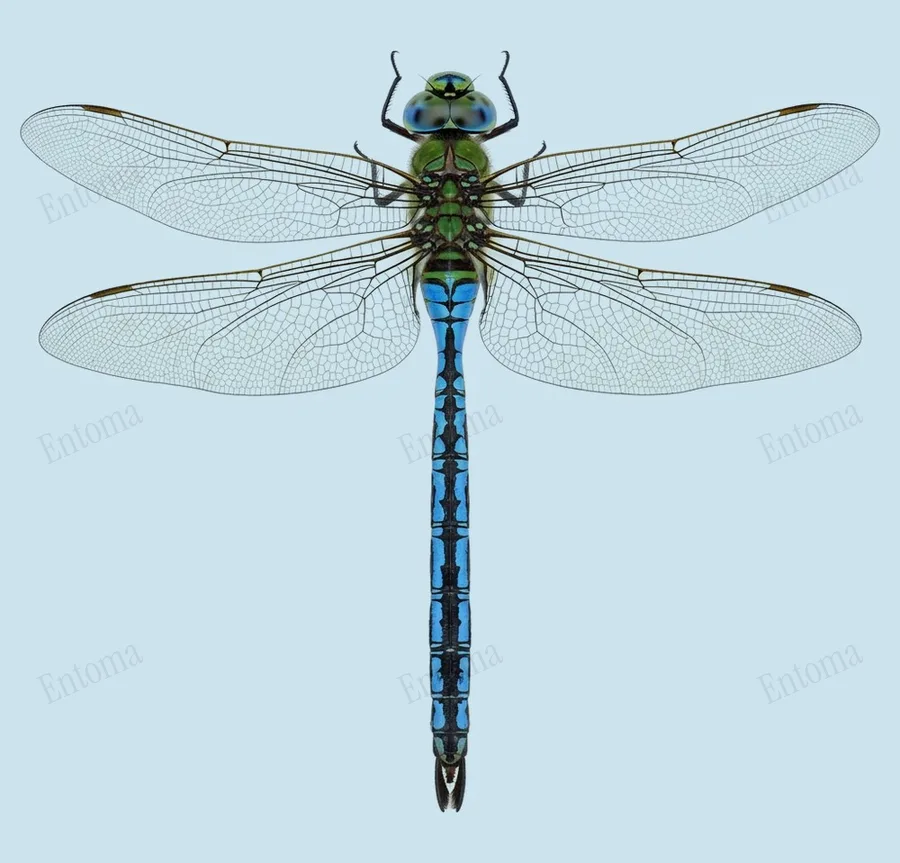
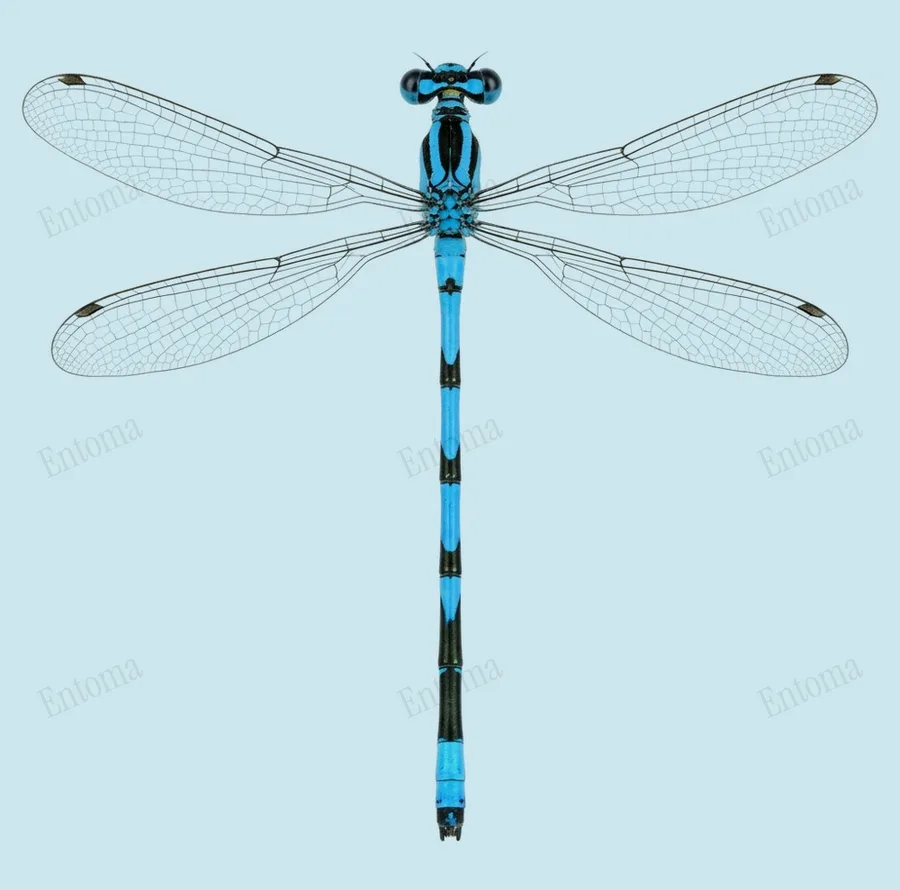
The easiest clue is the wings at rest. A dragonfly holds them out to the sides like an aeroplane, while a damselfly folds them closed along its body.
Then look at the eyes. A dragonfly has very large eyes that sit close together; a damselfly has smaller eyes with a gap between them. Dragonflies are chunky and short bodied, damselflies smaller, with a long, thin body like a twig.
In a dragonfly the hindwings are broader at the base than the forewings. In a damselfly the front and back wings have the same shape and narrow where they join the body.
Life in the water first
Both groups begin life as nymphs living in water. Depending on the species, that stage lasts from a few months to several years. The flying adults over ponds and streams are the last stage of their lives.
Some dragonflies
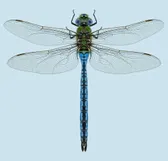
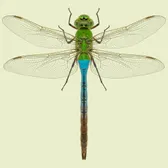
The emperor dragonfly is large and bulky, about 78 mm long, and often flies with the tip of its abdomen bent slightly down. The common green darner is another large one, about 7 to 8 cm long.
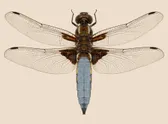
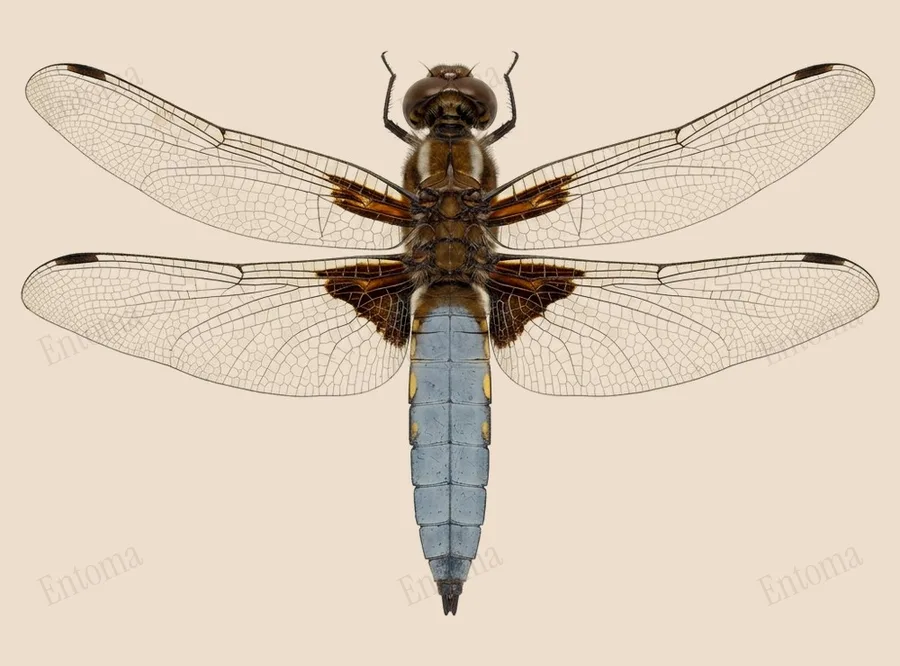
The broad-bodied chaser is 39 to 48 mm long, with a very broad, flat abdomen and dark patches at the wing bases. Mature males have a blue abdomen, while females and young males are golden brown with paler edges.
Some damselflies
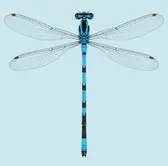
The male azure damselfly is blue with black markings, and the mark on the second segment of the abdomen is a U shape. The female is green and black.
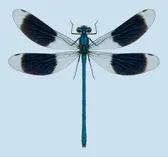
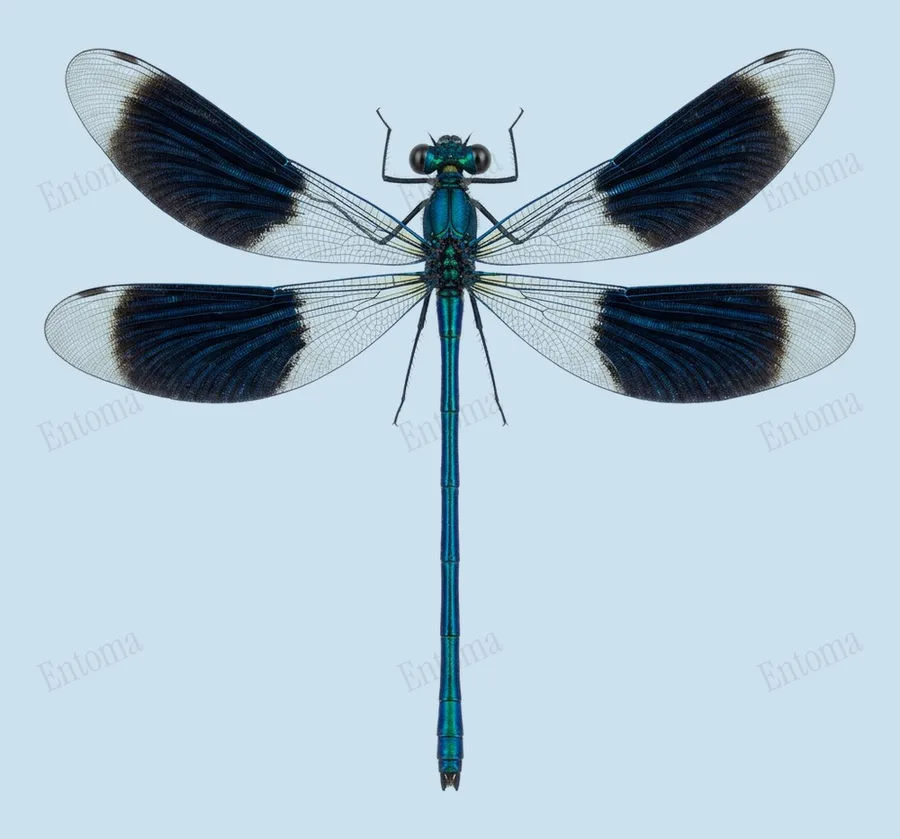
The male banded demoiselle has a metallic blue body and a broad dark blue black patch across each wing. The female has a metallic green body and pale green wings. It lives along slow flowing rivers and streams.