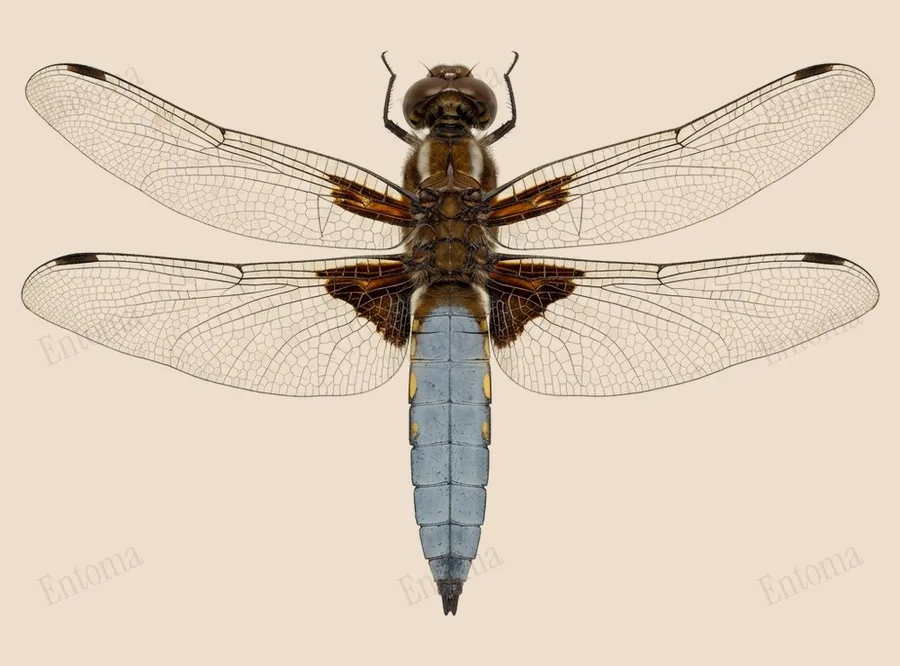
Broad-bodied chaser
Mature males turn from brown to a chalky powder blue as a waxy bloom called pruinescence develops on the abdomen, which can rub off if the dragonfly is handled.
| Where | Ponds, canals, garden pools |
|---|---|
| Size | 70 to 80 mm wingspan |
| When | May to July |
It has an unusually broad, flattened abdomen: pale blue in mature males, brown with paired yellow spots in females and young males, with a dark triangular patch at the base of each of the four wings.
Males are strongly territorial, perching on waterside stems or bare ground at a favoured pond edge and darting out to chase off rival males or intercept passing females.
Traits
Habitat
Wetland
Colour
Blue, Brown, Yellow
Active
Day
To people
Harmless; does not bite or sting people
Activity through the year
Often confused with
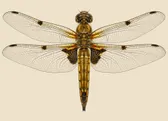
The four-spotted chaser has a slimmer, more parallel-sided abdomen without the powder-blue males, and shows a distinct dark spot in the middle of each wing's leading edge.
Questions
Is the Broad-bodied chaser dangerous to people?
Harmless; does not bite or sting people.
When can you see the Broad-bodied chaser?
The Broad-bodied chaser can be seen from May to July, by day.
Plate retouched from a photo by Thomas Bresson, CC BY 2.0, Wikimedia Commons Licence
Report a mistake in this entry
Dragonflies and damselflies›Skimmers›Libellula
Last updated 2026-09-26. Every entry is checked against published sources.