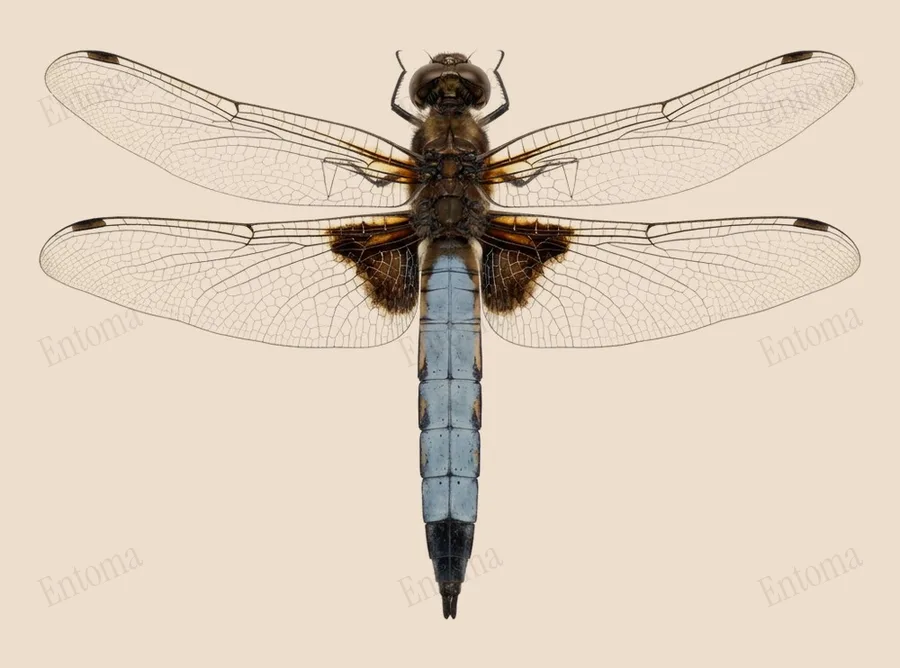
Scarce chaser
Young males are bright orange like the females and only turn powder blue as they mature over several weeks.
| Where | Slow rivers, ditches, ponds |
|---|---|
| Size | 64 to 76 mm wingspan |
| When | May to July |
Mature males show a powder-blue abdomen tipped with black and dark patches at the base of each hindwing, while females and young males have a bright orange abdomen with a dark central stripe and smoky wingtips.
Eggs are laid into slow, well-vegetated waterways, and the larvae spend around two years underwater before emerging for a flight season of only a few months.
Traits
Habitat
Wetland
Colour
Blue, Orange, Black
Active
Day
To people
Harmless; it depends on slow, richly vegetated waters that are declining in many places.
Activity through the year
Often confused with
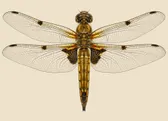
Similar in size at 74 to 78 mm wingspan, but has a dark spot at the middle of each wing's front edge and never turns blue.
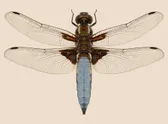
Close in wingspan at about 70 mm, but has a much broader, flatter abdomen and larger dark patches at the wing bases.
Questions
Is the Scarce chaser dangerous to people?
Harmless; it depends on slow, richly vegetated waters that are declining in many places.
When can you see the Scarce chaser?
The Scarce chaser can be seen from May to July, by day.
Plate retouched from a photo by Parent Géry, CC BY‑SA 4.0, Wikimedia Commons Licence
The plate on this page is shared under the same licence as its source, CC BY-SA.
Report a mistake in this entry
Dragonflies and damselflies›Skimmers›Libellula
Last updated 2026-09-26. Every entry is checked against published sources.