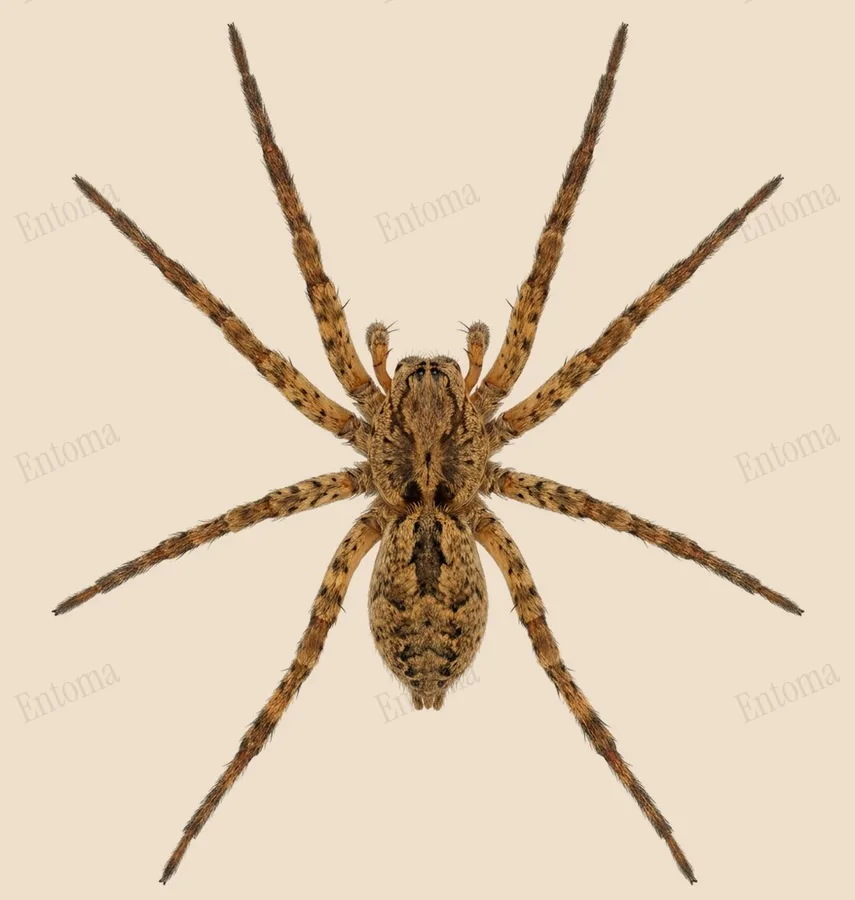
Mediterranean spiny false wolf spider
Despite its bulky, hairy build, this spider does not spin a web to hunt; it patrols walls and floors at night and increasingly shelters inside houses across Europe.
| Where | Buildings, walls and open woodland |
|---|---|
| Size | Male 10 to 13 mm, female 10 to 19 mm body length |
| When | January to December |
This large, robust spider has a pale yellowish white head marked with bold black patches and a similarly patterned abdomen, features that have earned it the nickname Nosferatu spider in some places; the legs are brown with fine speckling.
It hunts actively on foot at night rather than building a web, sheltering by day under bark or stones outdoors, and has spread widely into houses, garages and sheds across Europe over the past few decades.
Traits
Habitat
Towns
Colour
Brown, Black, White
Active
Night
To people
Mild
This spider can bite if handled, but the bite is only mildly painful and any swelling clears within a few hours; it is not dangerous to people and is best left undisturbed or gently relocated.
Activity through the year
Often confused with
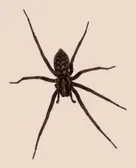
Sometimes mistaken for the giant house spider, which is plain dark brown and builds a flat, funnel shaped web, unlike this species active, web free hunting and boldly masked head pattern.
Questions
Is the Mediterranean spiny false wolf spider dangerous to people?
Mild. This spider can bite if handled, but the bite is only mildly painful and any swelling clears within a few hours; it is not dangerous to people and is best left undisturbed or gently relocated.
When can you see the Mediterranean spiny false wolf spider?
The Mediterranean spiny false wolf spider can be seen from January to December, at night.
Plate retouched from a photo by Patrick Hacker, CC BY 4.0, iNaturalist Licence
Report a mistake in this entry
Spiders›False wolf spiders›Zoropsis
Last updated 2026-09-27. Every entry is checked against published sources.