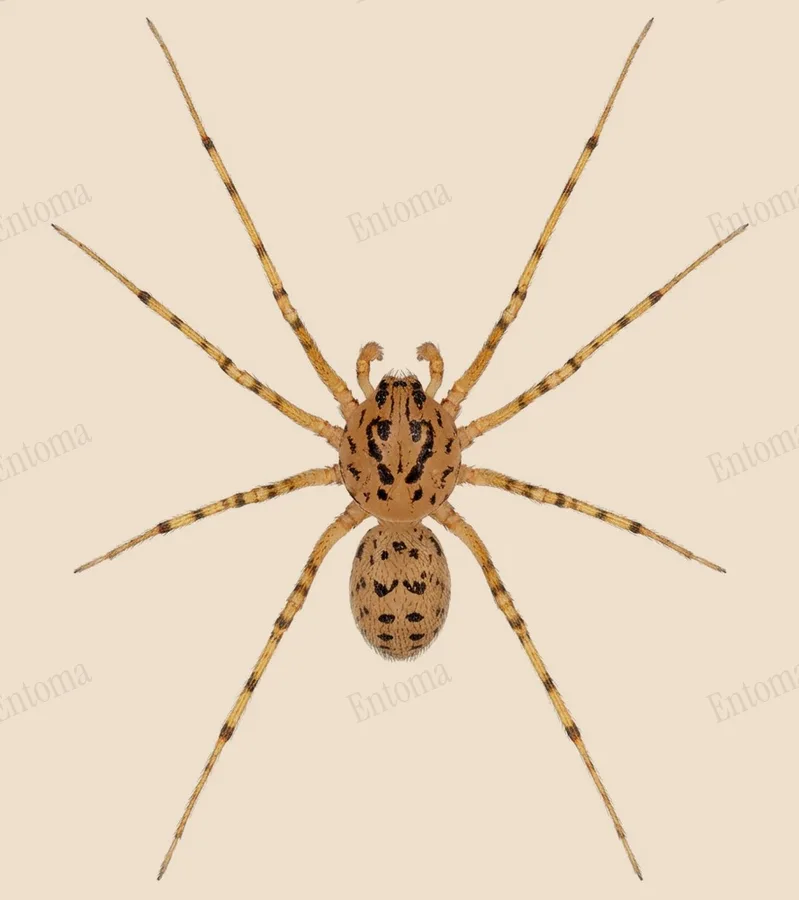
Common spitting spider
This spider catches prey by spraying a mix of venom and glue from its fangs in a zigzag pattern, pinning insects down before it touches them.
| Where | Houses, cellars and under stones |
|---|---|
| Size | Male 3.5 to 4 mm, female 4 to 5.5 mm body length |
| When | February to November |
The common spitting spider is a small, pale yellow spider speckled with black markings, with a domed carapace that slopes upward toward the rear while the abdomen slopes down, and only six eyes rather than the usual eight. Body length ranges from about 3.5 to 4 mm in males and 4 to 5.5 mm in females.
Rather than spinning a web, it hunts at night, creeping close to a resting insect before spraying it with a fast zigzag jet of sticky, venom-laced silk that pins it in place. It is often found indoors in dark corners, cellars and cupboards as well as under stones and bark outdoors.
Traits
Habitat
Towns
Colour
Yellow, Black
Active
Night
To people
Not known to bite people; its spitting attack is used only to subdue small insect prey, never in defence against a person.
Activity through the year
Often confused with
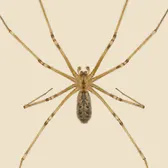
The long-bodied cellar spider has very long, thread-thin legs and a small pale body about 7 to 10 mm long, without the domed, mottled carapace and short banded legs of the spitting spider.
Questions
Is the Common spitting spider dangerous to people?
Not known to bite people; its spitting attack is used only to subdue small insect prey, never in defence against a person.
When can you see the Common spitting spider?
The Common spitting spider can be seen from February to November, at night.
Plate retouched from a museum specimen photo by Staatliche Naturwissenschaftliche Sammlungen Bayerns, CC BY 4.0, GBIF Licence
Report a mistake in this entry
Spiders›Spitting spiders›Scytodes
Last updated 2026-09-27. Every entry is checked against published sources.