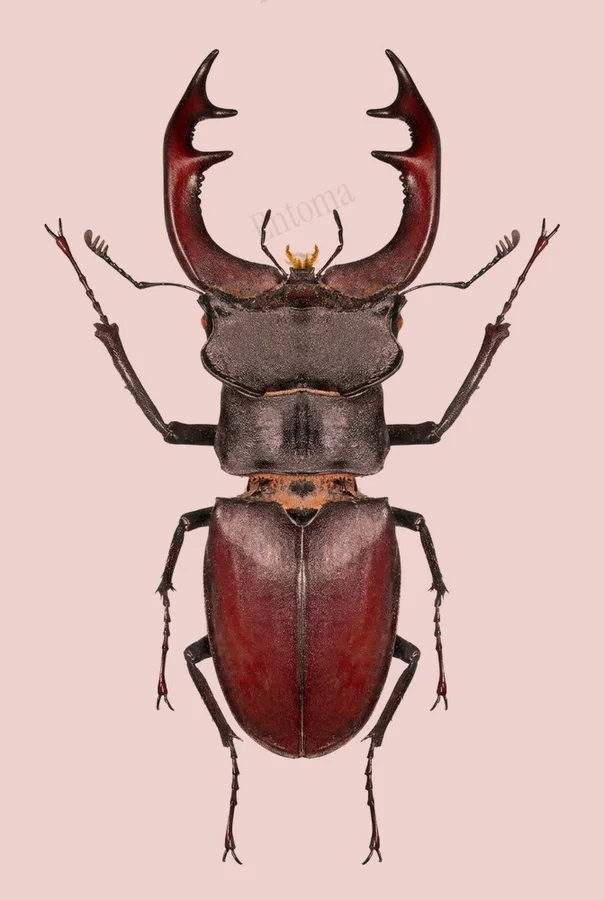
European stag beetle
Male stag beetles use their oversized branched jaws to wrestle rivals off deadwood, a contest that rarely causes serious injury to either beetle.
| Where | Woodland edges, hedgerows, old gardens with deadwood |
|---|---|
| Size | 30 to 75 mm long |
| When | May to August |
Males are unmistakable, with a shiny black head and thorax, chestnut brown wing cases, and huge branched jaws; females are smaller with much shorter jaws.
Larvae develop underground in decaying wood for several years before pupating, and the short-lived adults cannot feed, relying on fat reserves built up as larvae.
Traits
Habitat
Woodland
Colour
Brown, Black
Active
Night
To people
Harmless; males cannot bite despite the large jaws.
Activity through the year
Often confused with
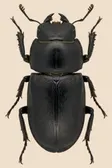
Lesser stag beetle is entirely black, rarely exceeds 32 mm, and lacks the branched antler-like jaws and chestnut brown wing cases of the European stag beetle.
Questions
Is the European stag beetle dangerous to people?
Harmless; males cannot bite despite the large jaws.
When can you see the European stag beetle?
The European stag beetle can be seen from May to August, at night.
Plate retouched from a photo by Didier Descouens, CC BY‑SA 4.0, Wikimedia Commons Licence
The plate on this page is shared under the same licence as its source, CC BY-SA.
Report a mistake in this entry
Last updated 2026-09-26. Every entry is checked against published sources.