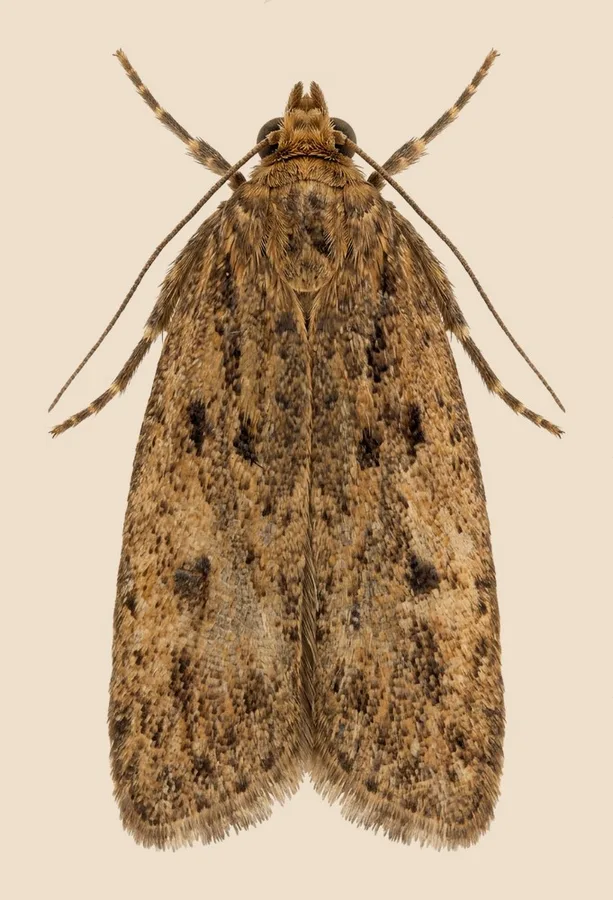
Brown house moth
Its caterpillars eat almost anything organic indoors, from stored grain to feathers, wool, and dry pet food, which let the species spread to nearly every continent.
| Where | Buildings, stores, and bird nests |
|---|---|
| Size | 15 to 26 mm wingspan |
| When | May to September |
It is a stout, bronze-brown moth with dark speckling across the forewing and a body that varies noticeably in size between individuals.
Caterpillars feed on a wide range of dried plant and animal material accumulating indoors, such as debris behind skirting boards, and the species now occurs worldwide after spreading from Asia in the 1840s.
Traits
Habitat
Towns
Colour
Brown
Active
Night
To people
Harmless
Activity through the year
Often confused with
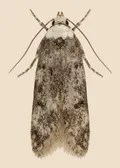
White-shouldered house moth has a bright white head and shoulders against grey-brown wings, unlike the uniformly brown head and body of the brown house moth.
Questions
Is the Brown house moth dangerous to people?
The Brown house moth is harmless to people.
When can you see the Brown house moth?
The Brown house moth can be seen from May to September, at night.
Plate retouched from a photo by Ben Sale from Stevenage, UK, CC BY 2.0, Wikimedia Commons Licence
Report a mistake in this entry
Butterflies and moths›Concealer moths›Hofmannophila
Last updated 2026-09-26. Every entry is checked against published sources.