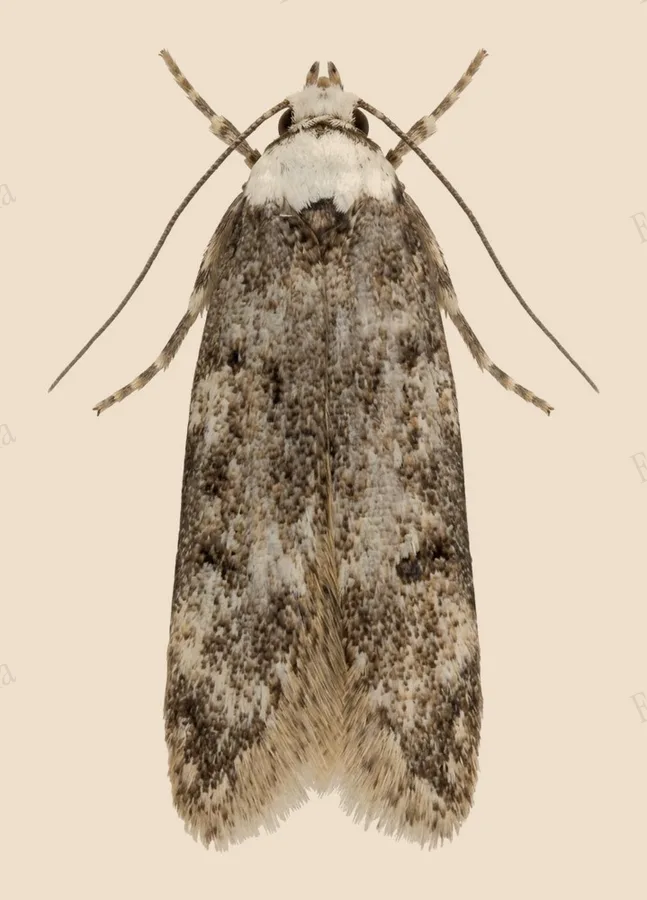
White-shouldered house moth
The White-shouldered house moth's caterpillars will eat almost anything dry and organic indoors, from grain and dried fruit to feathers, wool and old bird nests.
| Where | Houses, sheds and outbuildings |
|---|---|
| Size | 13 to 20 mm wingspan |
| When | April to October |
The White-shouldered house moth is a small pale grey brown moth readily told apart from other house moths by its white head and shoulders, which contrast with its mottled wings.
Caterpillars feed on stored grain, dried fruit, feathers, wool and general household debris, often breeding continuously indoors, and adults are common in houses, sheds and outbuildings for most of the year.
Traits
Habitat
Towns
Colour
Brown, White
Active
Night
To people
Attracted to light; harmless to people, though larvae can contaminate stored food.
Activity through the year
Often confused with
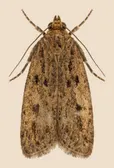
Similar in size, about 16 to 25 mm wingspan, but plain brownish grey overall and lacking the pale white head and shoulders that identify the White-shouldered house moth.
Questions
Is the White-shouldered house moth dangerous to people?
Attracted to light; harmless to people, though larvae can contaminate stored food.
When can you see the White-shouldered house moth?
The White-shouldered house moth can be seen from April to October, at night.
Plate retouched from a photo by Ben Sale, CC BY 2.0, Wikimedia Commons Licence
Report a mistake in this entry
Butterflies and moths›Concealer moths›Endrosis
Last updated 2026-09-26. Every entry is checked against published sources.