| Pest | Larvae feed on |
|---|---|
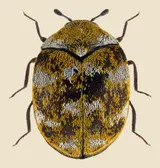
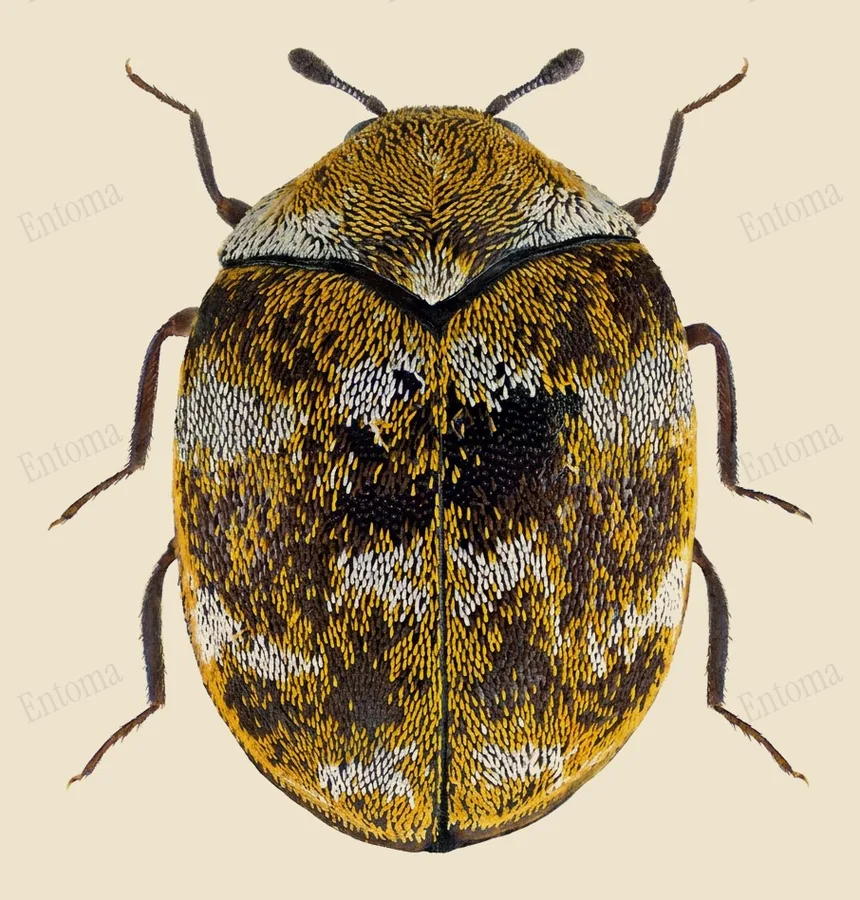
| Varied carpet beetle | Feathers and other natural animal fibres |
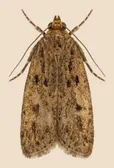
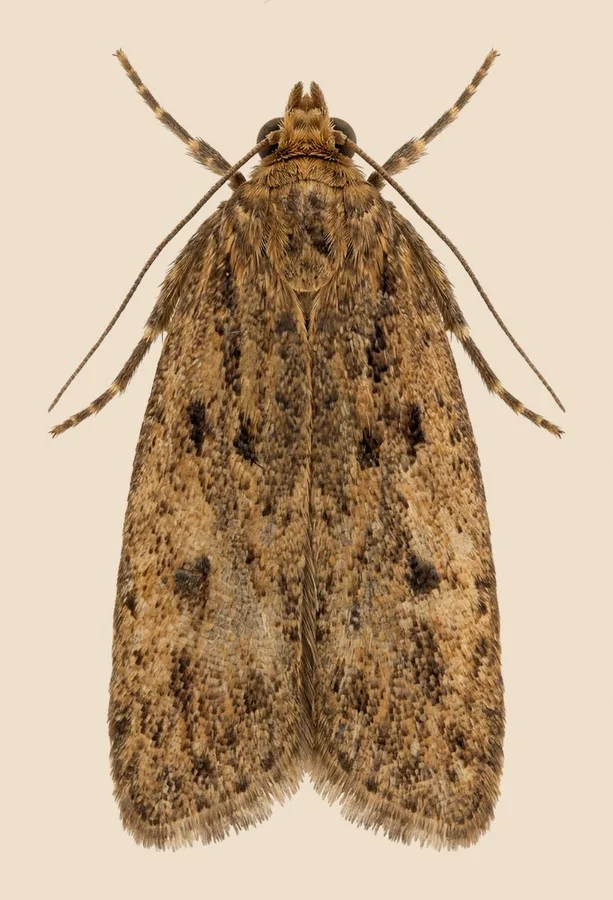
| Brown house moth | Dry animal and plant material such as fur, wool, fabric and seeds |
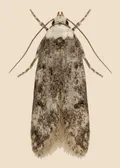
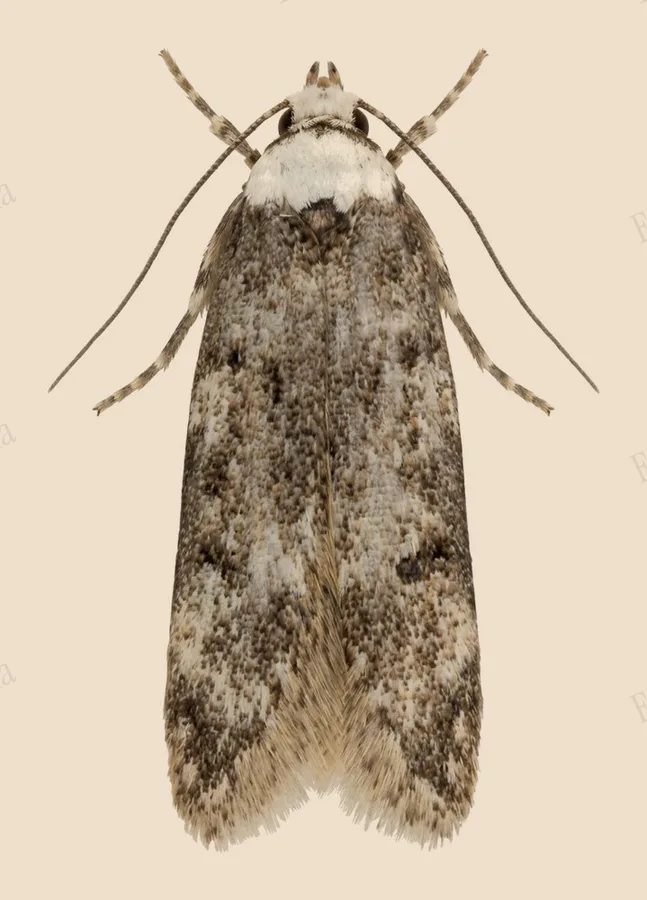
| White-shouldered house moth | Dried plant and animal debris |
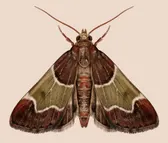
| Meal moth | Stored grain, flour and damaged seeds, especially when damp or spoiled |
The varied carpet beetle
The adult varied carpet beetle is tiny, about 3 mm long, and rounded, with a pattern of white and darker colours. Adults feed on pollen and nectar and are found outdoors on flowers.
Indoors the trouble comes from the larvae, which eat animal based materials such as feathers and other natural fibres. Regular, thorough vacuuming removes eggs and larvae before they can do damage.
The brown house moth
The brown house moth has a wingspan of 15 to 26 mm. Its caterpillars eat dry animal and plant material indoors, such as fur, wool, fabric and seeds.
It came originally from Asia and was carried to Europe and other parts of the world in the 1840s. Adults can be seen at any time of year, though they are most common in summer.
The white-shouldered house moth
The white-shouldered house moth breeds without a break indoors, so it can turn up in any month. Its larvae live on dried plant and animal debris, and it has spread almost worldwide with people, carried unnoticed in dried stored goods.
The meal moth
The meal moth has a wingspan of roughly 18 to 30 mm and rests with the tip of its abdomen held up at a right angle to the body. It is found worldwide.
Its caterpillars feed on stored grain, flour and damaged seeds. They live mostly in grain stores, mills, barns and warehouses, especially where the material is damp or spoiled.