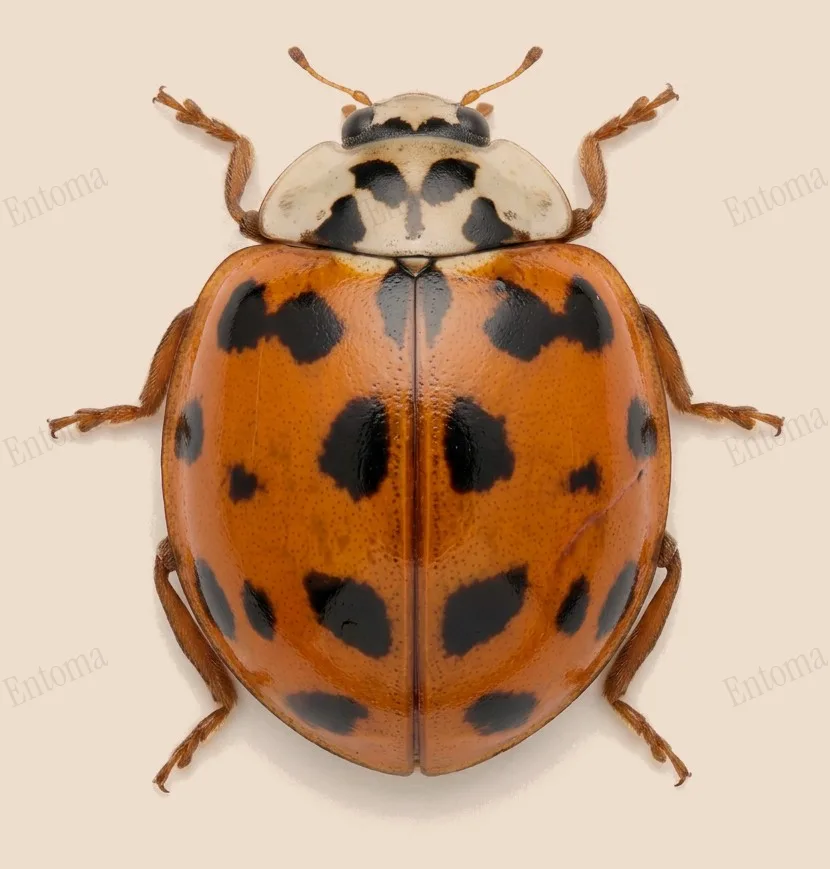
Harlequin ladybird
It was brought to Europe to eat greenhouse aphids and now outnumbers many native ladybirds.
| Where | Gardens, parks, lime and sycamore trees, house walls in autumn |
|---|---|
| Size | 5 to 8 mm |
| When | March to November |
The pattern varies wildly: orange with up to 21 spots, black with two or four red spots, and many forms in between. The white pronotum with a black M or W mark is the most reliable sign.
In autumn large groups gather on sunny walls and slip into houses to spend the winter. Handled, it releases a bitter yellow fluid that can stain.
Traits
Habitat
Garden
Colour
Red, Black
Active
Day
To people
Harmless; may nip and leave a yellow stain
Activity through the year
Often confused with
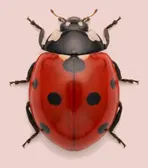
The seven-spot is always red with seven black spots, and its legs are black.
Questions
Is the Harlequin ladybird dangerous to people?
Harmless; may nip and leave a yellow stain.
When can you see the Harlequin ladybird?
The Harlequin ladybird can be seen from March to November, by day.
Plate retouched from a museum specimen photo by Tegan Von Der Heyde, University of Kansas Biodiversity Institute, CC BY 4.0, GBIF Licence
Report a mistake in this entry
Last updated 2026-09-26. Every entry is checked against published sources.