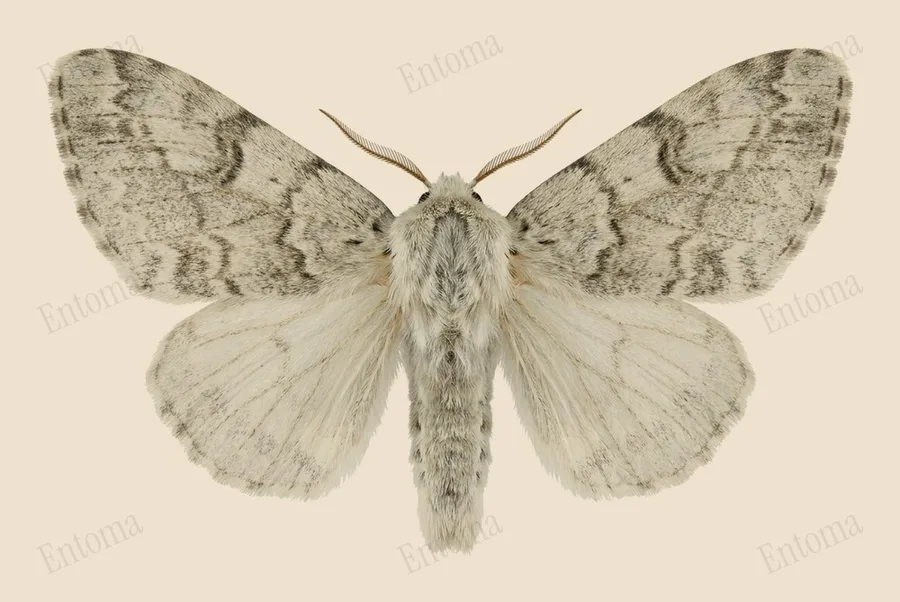
Pale tussock moth
Males and females look so different, one greyish white and one olive-grey, that they could easily pass for two separate species.
| Where | Woodland edges and gardens |
|---|---|
| Size | 40 to 68 mm wingspan |
| When | April to June |
Females are pale grey with dark wavy lines and a wingspan up to about 68 mm, while males are smaller and olive-grey with darker markings; both hold their hairy front legs stretched out at rest.
The caterpillars are covered in dense tufts of hairs that can irritate skin, and they feed on a wide range of trees and shrubs including birch, oak and hop.
Traits
Habitat
Garden
Colour
Grey, Brown
Active
Night
To people
Mild
Caterpillar hairs can irritate skin; adult moth is harmless
Activity through the year
Often confused with
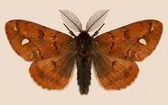
The vapourer has strongly feathered antennae and a pair of white eye-spots on its wings, while the pale tussock instead holds its densely hairy front legs stretched out in front at rest.
Questions
Is the Pale tussock moth dangerous to people?
Mild. Caterpillar hairs can irritate skin; adult moth is harmless.
When can you see the Pale tussock moth?
The Pale tussock moth can be seen from April to June, at night.
Plate retouched from a photo by Didier Descouens, CC BY‑SA 3.0, Wikimedia Commons Licence
The plate on this page is shared under the same licence as its source, CC BY-SA.
Report a mistake in this entry
Butterflies and moths›Erebid moths›Calliteara
Last updated 2026-09-26. Every entry is checked against published sources.