Vapourer
The female cannot fly at all and never leaves her cocoon, mating and laying her eggs there while looking more like a plump grey woodlouse than a moth.
| Where | Gardens, parks, woodland edges |
|---|---|
| Size | 30 to 38 mm wingspan (males; females wingless) |
| When | May to October |
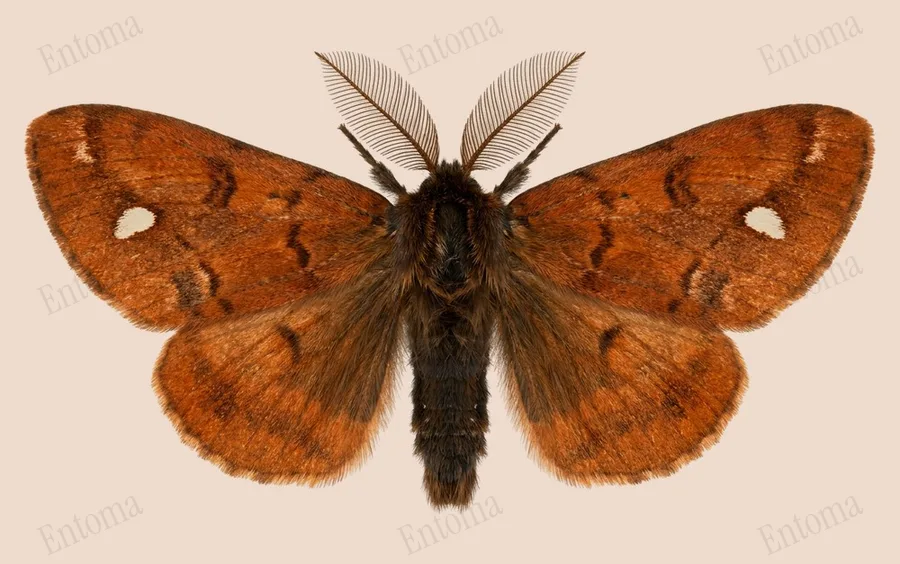
Males have rusty orange-brown wings with a small white spot near the rear corner of the forewing and broadly feathered antennae, while females are almost wingless, grey-brown and swollen bodied. The caterpillar is the more familiar sight, with dense grey hair, red spots and four upright yellowish tufts.
After mating on the cocoon, the female lays her eggs directly on it, and the eggs overwinter there before caterpillars hatch in spring to feed on a wide range of trees and shrubs.
Traits
Habitat
Garden
Colour
Orange, Brown, White
Active
Day and night
To people
Mild
Mostly harmless, though the caterpillar's hairs can cause a mild itchy rash in sensitive people.
Activity through the year
Often confused with
The scarce vapourer lacks the clean white wing spot and has more evenly coloured rust-brown wings, at a similar 35 to 40 mm wingspan.
Questions
Is the Vapourer dangerous to people?
Mild. Mostly harmless, though the caterpillar's hairs can cause a mild itchy rash in sensitive people.
When can you see the Vapourer?
The Vapourer can be seen from May to October, by day and at night.
Plate retouched from a photo by Ben Sale from UK, CC BY 2.0, Wikimedia Commons Licence
Report a mistake in this entry
Butterflies and moths›Erebid moths›Orgyia
Last updated 2026-09-26. Every entry is checked against published sources.