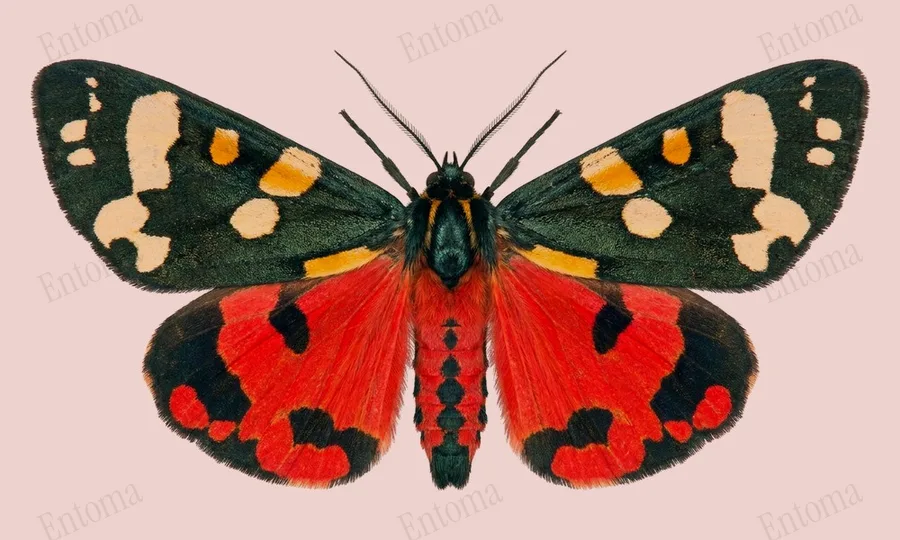
Scarlet tiger
Males often patrol in bright afternoon sunshine searching for mates, flashing scarlet hindwings that stay hidden while the moth is at rest.
| Where | Damp meadows, fens and coastal habitats |
|---|---|
| Size | 45 to 55 mm wingspan |
| When | April to July |
It is a large, striking moth with dark forewings marked in cream, yellow and metallic green spots, and bright scarlet hindwings that are concealed until it opens its wings or takes flight. Wingspan is about 45 to 55 mm.
Caterpillars start out on comfrey, hemp agrimony and hound's tongue before moving on to a broader range of plants such as nettle, bramble and honeysuckle as they grow, with adults flying by day in a single generation.
Traits
Habitat
Wetland
Colour
Black, Red
Active
Day
To people
Mild
Harmless to touch; it stores plant toxins and is distasteful and toxic if eaten.
Activity through the year
Often confused with

The cinnabar moth is smaller, with a wingspan of about 32 to 42 mm, and shows red streaks and spots on grey forewings rather than the scarlet tiger's cream and metallic green spotting.
Questions
Is the Scarlet tiger dangerous to people?
Mild. Harmless to touch; it stores plant toxins and is distasteful and toxic if eaten.
When can you see the Scarlet tiger?
The Scarlet tiger can be seen from April to July, by day.
Plate retouched from a photo by Patrick Clement from West Midlands, England, CC BY 2.0, Wikimedia Commons Licence
Report a mistake in this entry
Butterflies and moths›Erebid moths›Callimorpha
Last updated 2026-09-26. Every entry is checked against published sources.