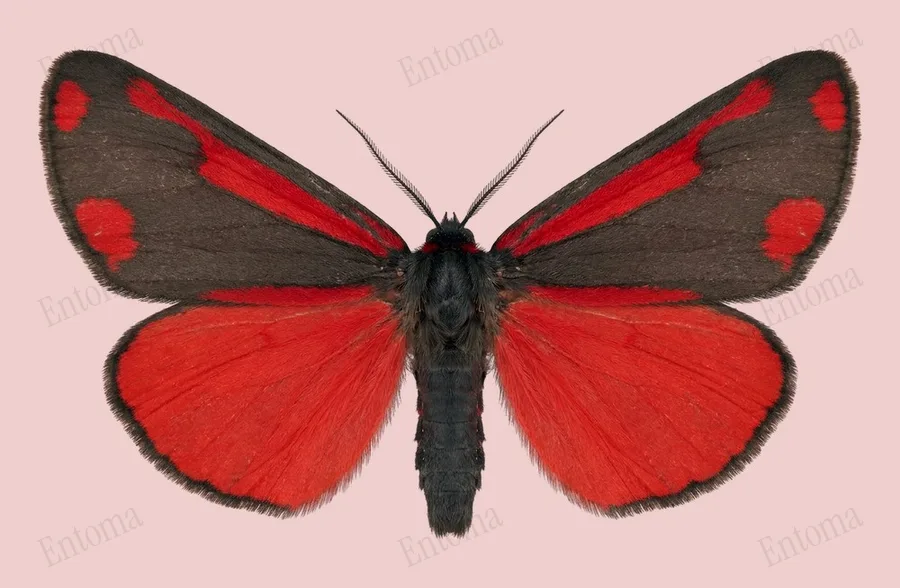
Cinnabar moth
Its black and yellow striped caterpillars store toxins from ragwort in their own bodies, keeping the poison even after they become moths.
| Where | Grassland, waste ground, dunes, roadside verges |
|---|---|
| Size | 32 to 42 mm wingspan |
| When | May to August |
The adult moth has slate-grey forewings marked with red streaks and red hindwings, a pattern that resembles no other common moth in its range except the burnets.
Although mostly night-flying, it is often disturbed by day from long grass, and its caterpillars feed openly and gregariously on ragwort.
Traits
Habitat
Grassland
Colour
Red, Black, Grey
Active
Day and night
To people
Mild
Cannot sting; the caterpillars and adults store toxic alkaloids from ragwort that can cause liver damage if eaten, but handling is not known to irritate skin.
Activity through the year
Often confused with
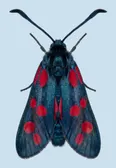
The six-spot burnet has metallic green forewings with six red spots rather than the cinnabar's grey forewings with red streaks.
Questions
Is the Cinnabar moth dangerous to people?
Mild. Cannot sting; the caterpillars and adults store toxic alkaloids from ragwort that can cause liver damage if eaten, but handling is not known to irritate skin.
When can you see the Cinnabar moth?
The Cinnabar moth can be seen from May to August, by day and at night.
Plate retouched from a photo by Vítězslav Maňák (SLU), CC BY‑SA 3.0, Wikimedia Commons Licence
The plate on this page is shared under the same licence as its source, CC BY-SA.
Report a mistake in this entry
Butterflies and moths›Erebid moths›Tyria
Last updated 2026-09-26. Every entry is checked against published sources.