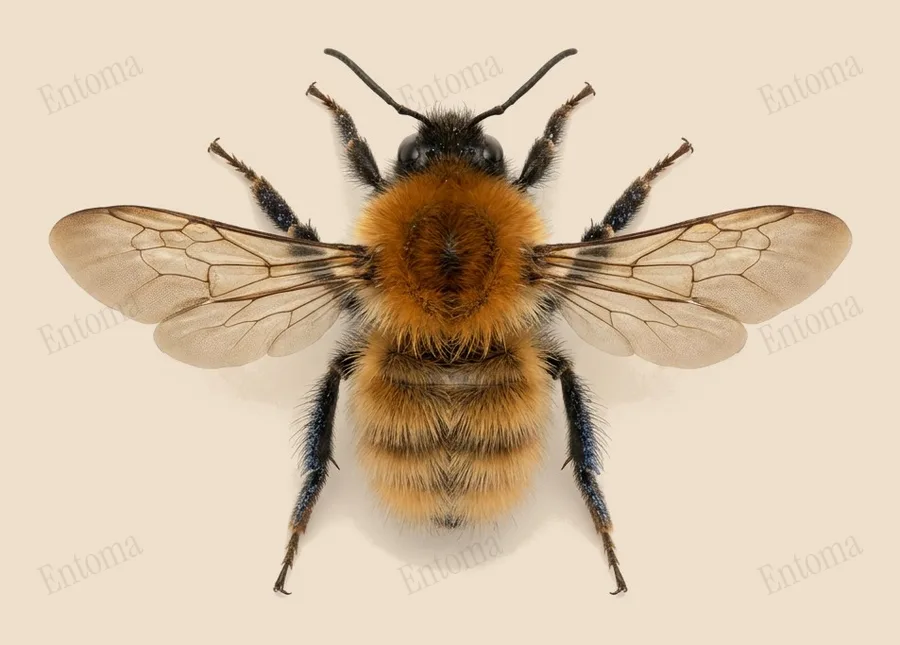
Common carder bee
It builds its nest above ground, combing moss and dry grass into a ball at the base of a tussock.
| Where | Gardens, hedgerows, woodland edges, flowery meadows |
|---|---|
| Size | 10 to 18 mm |
| When | April to September |
Colonies are small, often under 150 workers, and last from spring to autumn. Only young mated queens survive the winter.
Its tongue is longer than that of many bumblebees, so it can reach into deep flowers such as foxglove, clover and deadnettle.
Traits
Habitat
Garden
Colour
Brown, Yellow
Active
Day
To people
Mild
Rarely stings, only if pressed
Activity through the year
Often confused with
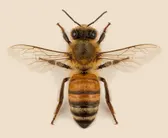
The honey bee is slimmer and less hairy, with a banded abdomen.
Questions
Is the Common carder bee dangerous to people?
Mild. Rarely stings, only if pressed.
When can you see the Common carder bee?
The Common carder bee can be seen from April to September, by day.
Plate retouched from a photo by Kostas Zontanos, CC BY 4.0, iNaturalist Licence
Report a mistake in this entry
Bees, wasps and ants›Bees and bumblebees›Bombus
Last updated 2026-09-26. Every entry is checked against published sources.