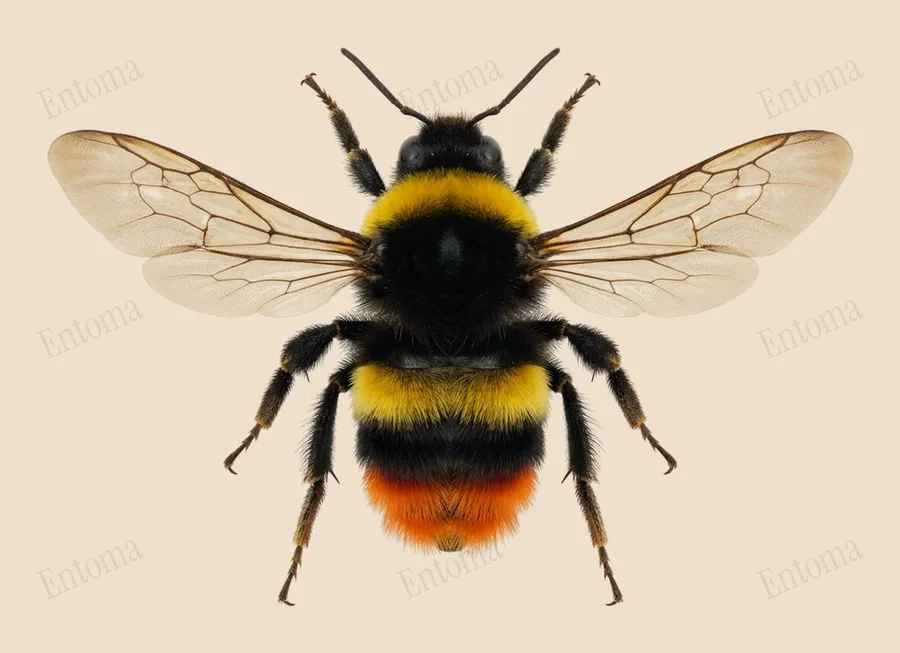
Early bumblebee
It is one of the smallest and earliest bumblebees to appear each year, often finishing its whole colony cycle before larger species are in full swing.
| Where | Gardens, woodland edges, hedgerows, parks |
|---|---|
| Size | 10 to 17 mm body length |
| When | March to August |
A small, neat bumblebee with a bright orange red tail and a yellow band on the thorax and another near the base of the abdomen, sometimes faded or missing in workers.
Colonies are short lived compared with other bumblebees, running from spring to midsummer, which is why this species is rarely seen much past July or August.
Traits
Habitat
Garden
Colour
Black, Yellow, Orange
Active
Day
To people
Mild
Females can sting but rarely do; not aggressive
Activity through the year
Often confused with
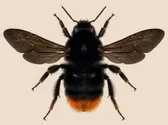
Red-tailed bumblebee is larger, with queens up to 22 mm, and lacks the yellow bands that early bumblebee keeps on the thorax and abdomen.
Questions
Is the Early bumblebee dangerous to people?
Mild. Females can sting but rarely do; not aggressive.
When can you see the Early bumblebee?
The Early bumblebee can be seen from March to August, by day.
Plate retouched from a photo by Arnstein Staverløkk, Norsk institutt for naturforskning, CC BY 3.0, Wikimedia Commons Licence
Report a mistake in this entry
Bees, wasps and ants›Bees and bumblebees›Bombus
Last updated 2026-09-26. Every entry is checked against published sources.