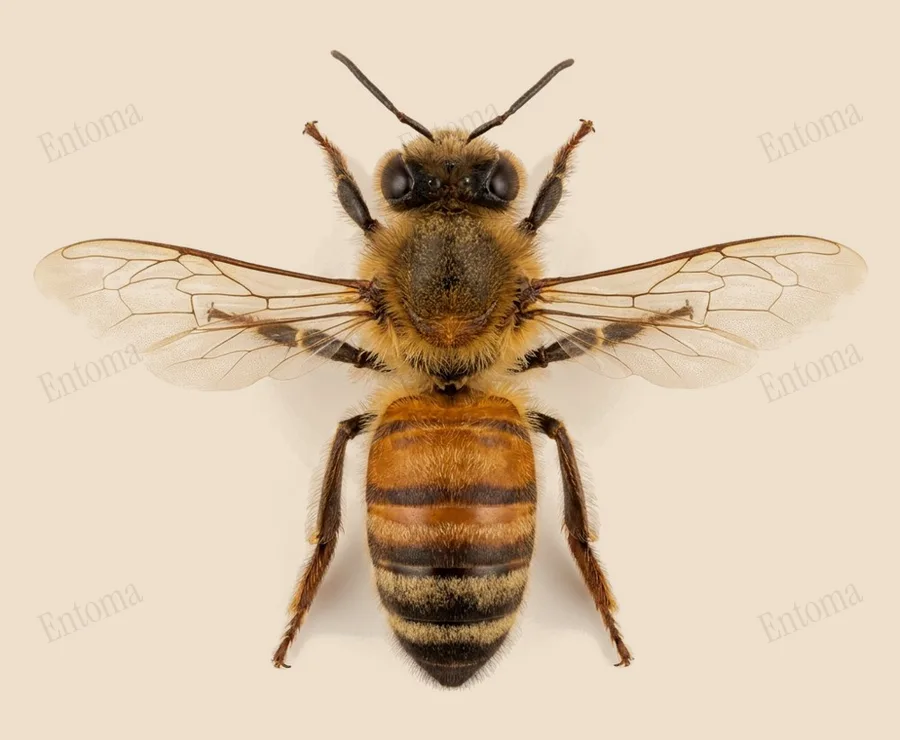
Western honey bee
A worker makes about a twelfth of a teaspoon of honey in its whole life.
| Where | Flowers near hives, gardens, orchards, meadows |
|---|---|
| Size | 12 to 15 mm (worker) |
| When | March to September |
A summer colony holds 20,000 to 60,000 workers, all daughters of one queen. Summer workers live about six weeks and wear themselves out foraging.
Returning foragers dance on the comb to share where food is. The angle of the waggle run points to the flower patch relative to the sun.
Traits
Habitat
Garden
Colour
Yellow, Brown
Active
Day
To people
Take care
Stings if handled or trapped
Activity through the year
Often confused with
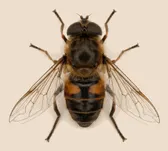
The drone fly has one pair of wings, huge eyes and short stubby antennae.
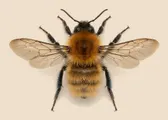
The carder bee is rounder and covered in dense ginger hair.
Questions
Is the Western honey bee dangerous to people?
Take care. Stings if handled or trapped.
When can you see the Western honey bee?
The Western honey bee can be seen from March to September, by day.
Plate retouched from a museum specimen photo by University of California Santa Barbara Invertebrate Zoology Collection, Cheadle Center for Biodiversity and Ecological Restoration, CC0, GBIF Licence
Report a mistake in this entry
Bees, wasps and ants›Bees and bumblebees›Apis
Last updated 2026-09-26. Every entry is checked against published sources.