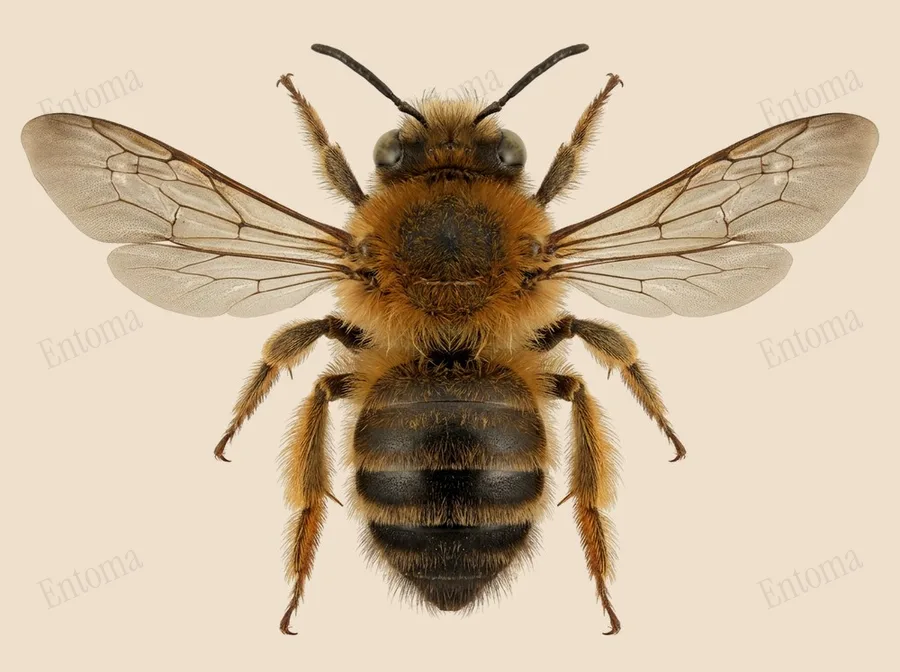
Hairy-footed flower bee
This solitary bee nests for generations in the same soft banks and old walls, letting the cuckoo bee Melecta albifrons sneak its eggs into the burrows unnoticed.
| Where | Gardens, walls and open woodland |
|---|---|
| Size | 13 to 15 mm body length |
| When | March to May |
Females are black and furry with bright orange pollen brushes on the hind legs, while males are rusty brown with a pale yellow face and long orange hairs on their middle legs, the feature that gives the species its name.
Flying from March to May, it is an important early pollinator of lungwort, primrose and comfrey, and nests in loose soil banks or old soft mortar, often returning to the same site year after year.
Traits
Habitat
Garden
Colour
Black, Orange, Brown
Active
Day
To people
Mild
A fast, docile flier that pays people little attention; females can sting if handled or trapped, causing brief local pain.
Activity through the year
Often confused with
Smaller at about 10 to 14 mm and brownish in both sexes without pale hair bands, and on the wing later in the year, from May into early autumn rather than spring.
Questions
Is the Hairy-footed flower bee dangerous to people?
Mild. A fast, docile flier that pays people little attention; females can sting if handled or trapped, causing brief local pain.
When can you see the Hairy-footed flower bee?
The Hairy-footed flower bee can be seen from March to May, by day.
Plate retouched from a museum specimen photo by Neuvonen, Tapani, Finnish Museum of Natural History - Zoology Unit, CC BY 4.0, GBIF Licence
Report a mistake in this entry
Bees, wasps and ants›Bees and bumblebees›Anthophora
Last updated 2026-09-26. Every entry is checked against published sources.