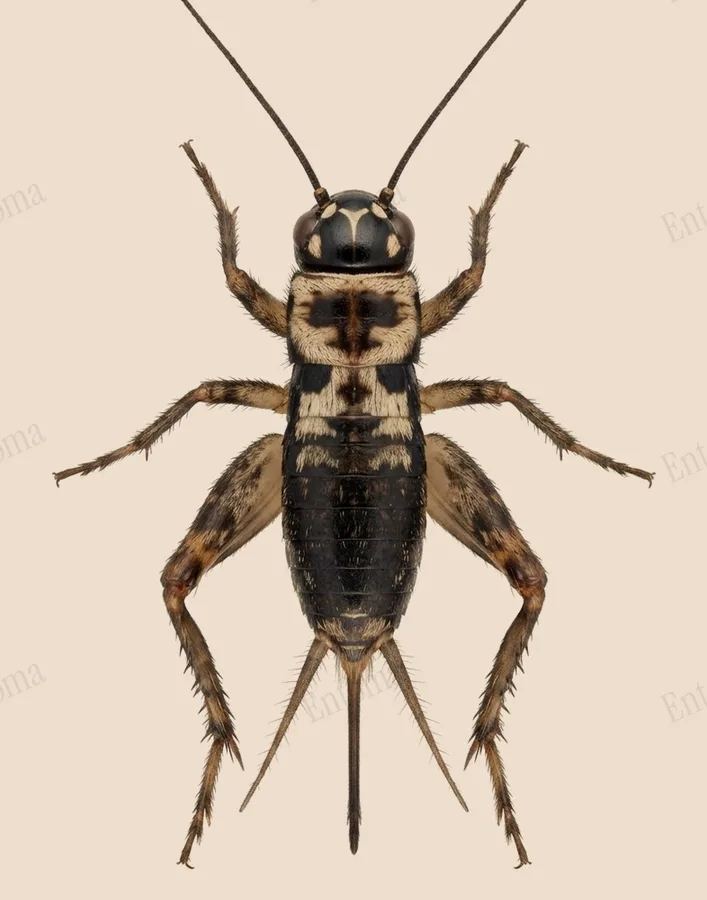
Wood cricket
Wood Crickets never developed hind wings at all, and their few remaining forewings only sing, since neither sex can fly even a short distance.
| Where | Woodland edges and leaf litter |
|---|---|
| Size | 7 to 10 mm body length |
| When | May to October |
The Wood Cricket is small and dark brown, with long thread-like antennae and no hind wings at all; males keep short forewings reaching halfway down the abdomen, while females carry only rounded stubs and a long, curved ovipositor.
It lives among leaf litter at woodland edges and clearings, sheltering under fallen leaves, bark and moss, and feeding on decaying plant matter and the fungus growing among it. Males sing a soft, two-toned call by day and by night whenever the weather stays warm enough.
Traits
Habitat
Woodland
Colour
Brown
Active
Day and night
To people
Harmless to people; it feeds on leaf litter and fungus rather than living plants or food.
Activity through the year
Often confused with
It keeps to wet, unshaded marshes, peatland and stream banks, while the Wood Cricket stays in dry leaf litter at woodland edges.
Questions
Is the Wood cricket dangerous to people?
Harmless to people; it feeds on leaf litter and fungus rather than living plants or food.
When can you see the Wood cricket?
The Wood cricket can be seen from May to October, by day and at night.
Plate retouched from a photo by Nico, CC0, iNaturalist Licence
Report a mistake in this entry
Crickets and grasshoppers›Sword-tail crickets›Nemobius
Last updated 2026-09-26. Every entry is checked against published sources.