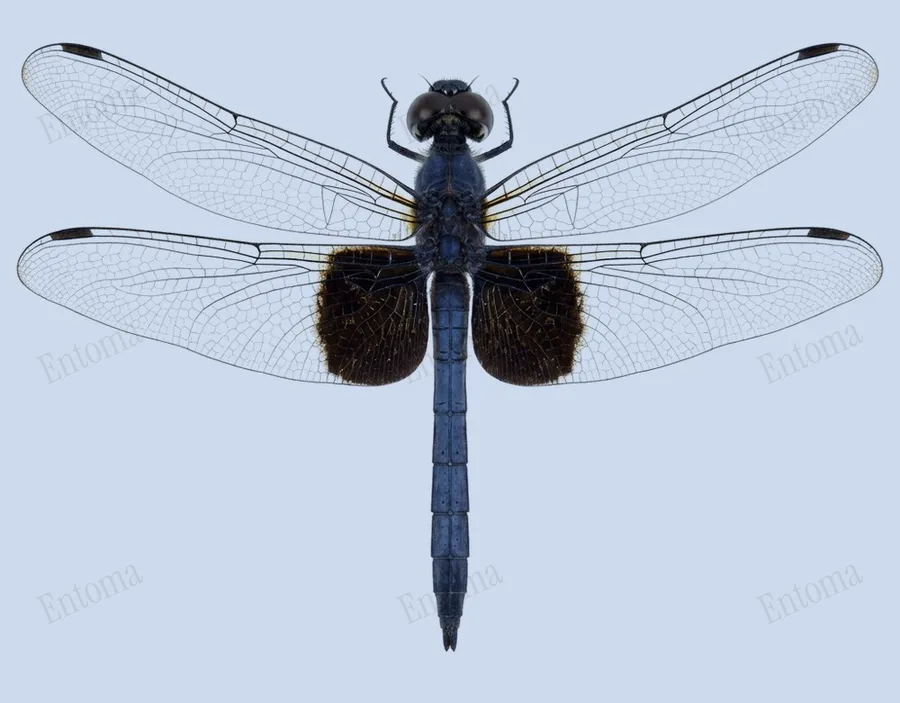
Treehugger
Both sexes of this dragonfly cling to bare tree trunks near shaded streams, often returning to the very same perch on the same trunk day after day.
| Where | Shaded forest streams and trunks |
|---|---|
| Size | 26 to 27 mm hindwing length |
| When | January to December |
Males are dark blue with a broad, slightly metallic blackish patch at the base of the hindwings, while females are light brown with a neatly patterned abdomen. It is the largest species in its genus.
It breeds in small forest streams and swampy pools, where both sexes rest flat against tree trunks close to the water, with males more often perching over shaded stretches of stream.
Traits
Habitat
Woodland
Colour
Blue, Brown, Black
Active
Day
To people
Does not bite or sting people; harmless and easy to approach while perched on tree trunks.
Activity through the year
Often confused with
Tyriobapta laidlawi is smaller and scarcer, usually turning up only alongside the Treehugger in the same streams rather than occurring widely on its own.
Questions
Is the Treehugger dangerous to people?
Does not bite or sting people; harmless and easy to approach while perched on tree trunks.
When can you see the Treehugger?
The Treehugger can be seen from January to December, by day.
Plate retouched from a photo by desertnaturalist, CC BY 4.0, iNaturalist Licence
Report a mistake in this entry
Dragonflies and damselflies›Skimmers›Tyriobapta
Last updated 2026-09-27. Every entry is checked against published sources.