Dancing dropwing
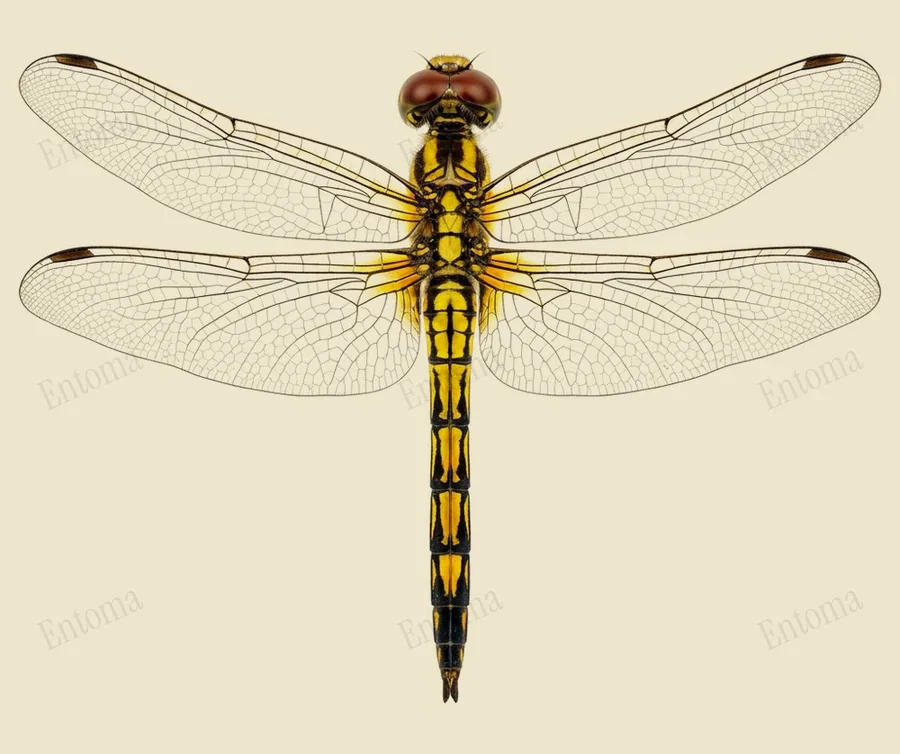
Unlike most Trithemis dragonflies, male and female Dancing dropwings look alike, both olivaceous brown with black markings and unusually pale, light coloured wing veins.
| Where | Stagnant ponds, lakes and marshes |
|---|---|
| Size | 26 to 32 mm abdomen length |
| When | March to December |
The Dancing dropwing is an olivaceous brown dragonfly with broad black markings, recognised by its very pale, almost colourless wing veins and well defined pale marks on the thorax and abdomen. Males and females are similarly patterned, unlike most other Trithemis dragonflies.
It breeds in stagnant water such as large ponds, lakes and marshy ground, and perches on high vantage points often well away from the water where it developed.
Traits
Habitat
Wetland
Colour
Brown, Black
Active
Day
To people
Perches openly on high vantage points; safe to observe or photograph.
Activity through the year
Often confused with
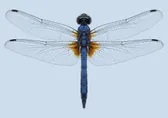
Body is mostly black with fine blue pruinescence giving a deep purple sheen, unlike the olivaceous brown body and unusually pale, light coloured wing veins of the Dancing dropwing.
Questions
Is the Dancing dropwing dangerous to people?
Perches openly on high vantage points; safe to observe or photograph.
When can you see the Dancing dropwing?
The Dancing dropwing can be seen from March to December, by day.
Plate retouched from a museum specimen photo by Zane Holditch, Northern Arizona University, CC0, GBIF Licence
Report a mistake in this entry
Dragonflies and damselflies›Skimmers›Trithemis
Last updated 2026-09-27. Every entry is checked against published sources.