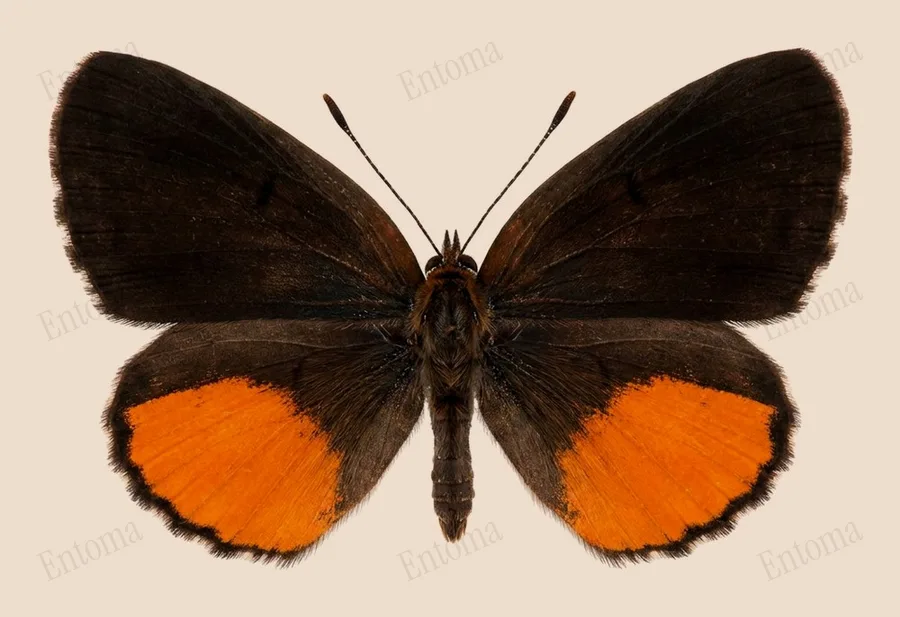
Red pierrot
Its caterpillars feed only on Kalanchoe succulents, commonly grown as garden and pot plants, which lets this small butterfly breed even in city gardens far from wild forest.
| Where | Semi-arid plains, forest edges and gardens |
|---|---|
| Size | 30 to 35 mm wingspan |
| When | January to December |
The Red pierrot is black above with a large orange red patch across the lower half of the hindwing, while the underside is silvery white with black spots and a marginal orange band. It is a small, low-flying butterfly that rests often on open ground and walls.
Caterpillars feed exclusively on Kalanchoe succulents, a plant family more often grown in gardens than found wild, and the species ranges from semi-arid plains to forest edges up to about 2400 metres, from the Himalayan foothills through India and Sri Lanka to Myanmar.
Traits
Habitat
Garden
Colour
Black, Orange, White
Active
Day
To people
Rests often on open ground and walls; safe to touch.
Activity through the year
Often confused with
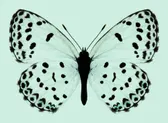
White above with black spotting and no orange patch, unlike the black upperside with its broad orange red patch seen on the Red pierrot.
Questions
Is the Red pierrot dangerous to people?
Rests often on open ground and walls; safe to touch.
When can you see the Red pierrot?
The Red pierrot can be seen from January to December, by day.
Plate retouched from a museum specimen photo by Finnish Museum of Natural History - Zoology Unit, CC BY 4.0, GBIF Licence
Report a mistake in this entry
Butterflies and moths›Blues and coppers›Talicada
Last updated 2026-09-27. Every entry is checked against published sources.