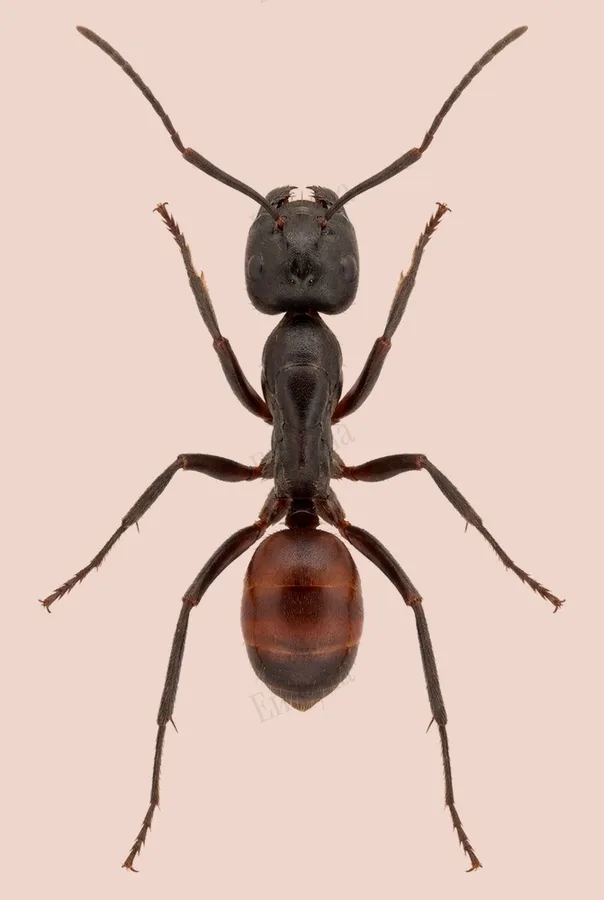
Giant forest ant
Worker ants forage mainly after dark, climbing into the rainforest canopy at dusk to tend sap-feeding insects for honeydew before returning to the nest by dawn.
| Where | Rainforest floor, tree buttresses and canopy |
|---|---|
| Size | 17 to 32 mm body length |
| When | January to December |
The giant forest ant is uniformly black, with a gaster that can show orange, reddish brown or light brown tones. Workers vary enormously in size, from smaller minor workers to much bigger soldiers with heavier, more heavily armed heads, and queens are larger still.
Nests are built in soil and rotting wood at the base of large trees, and colonies can number several thousand workers spread across several nests. Foragers leave mostly at dusk, climb high into the canopy to tend honeydew-producing insects, and return to the nest by dawn.
Traits
Habitat
Woodland
Colour
Black, Brown, Orange
Active
Night
To people
Mild
Not aggressive and usually retreats when disturbed; it has no sting but can bite hard enough to draw blood.
Activity through the year
Often confused with
Diacamma rugosum is a similarly glossy black forest ant but far smaller, at 10 to 12 mm, and its colonies have no queen caste, relying instead on a single mated worker.
Questions
Is the Giant forest ant dangerous to people?
Mild. Not aggressive and usually retreats when disturbed; it has no sting but can bite hard enough to draw blood.
When can you see the Giant forest ant?
The Giant forest ant can be seen from January to December, at night.
Plate retouched from a photo by Daniel Onneweer, CC BY 4.0, iNaturalist Licence
Report a mistake in this entry
Bees, wasps and ants›Ants›Dinomyrmex
Last updated 2026-09-27. Every entry is checked against published sources.