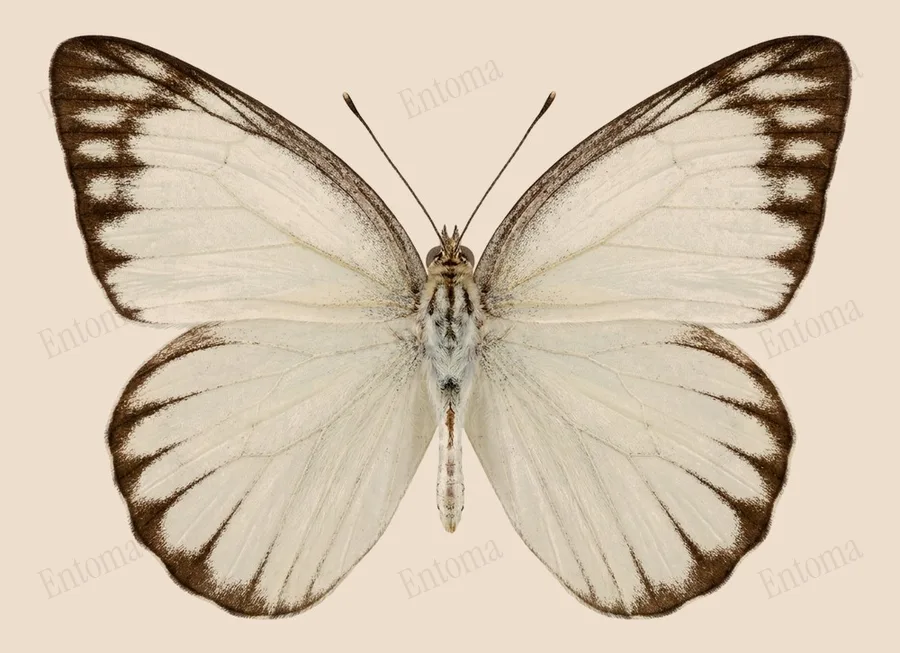
Striped albatross
This butterfly's caterpillars feed only on a single weedy garden plant, and the adult became common in some countries only within living memory by following that weed.
| Where | Wastelands, gardens and urban roadsides |
|---|---|
| Size | 50 to 60 mm wingspan |
| When | January to December |
The Striped Albatross is a small to medium white butterfly. Males are white with prominent black veins on the underside, while females are more heavily dark dusted with broad white streaks and yellow submarginal spots on the forewing.
Caterpillars feed only on Purple Cleome, a common weed of open and disturbed ground, and fast flying adults visit flowers for nectar while males gather at damp patches to take up minerals.
Traits
Habitat
Towns
Colour
White, Black, Yellow
Active
Day
To people
Visits flowers and damp ground in gardens; harmless to people.
Activity through the year
Often confused with
Underside of the hindwing is bright lemon yellow with a dark brown border, unlike the plain white underside of the Striped Albatross.
Questions
Is the Striped albatross dangerous to people?
Visits flowers and damp ground in gardens; harmless to people.
When can you see the Striped albatross?
The Striped albatross can be seen from January to December, by day.
Plate retouched from a museum specimen photo by Lee Kong Chian Natural History Museum, National University of Singapore, CC BY 4.0, GBIF Licence
Report a mistake in this entry
Butterflies and moths›Whites and yellows›Appias
Last updated 2026-09-27. Every entry is checked against published sources.