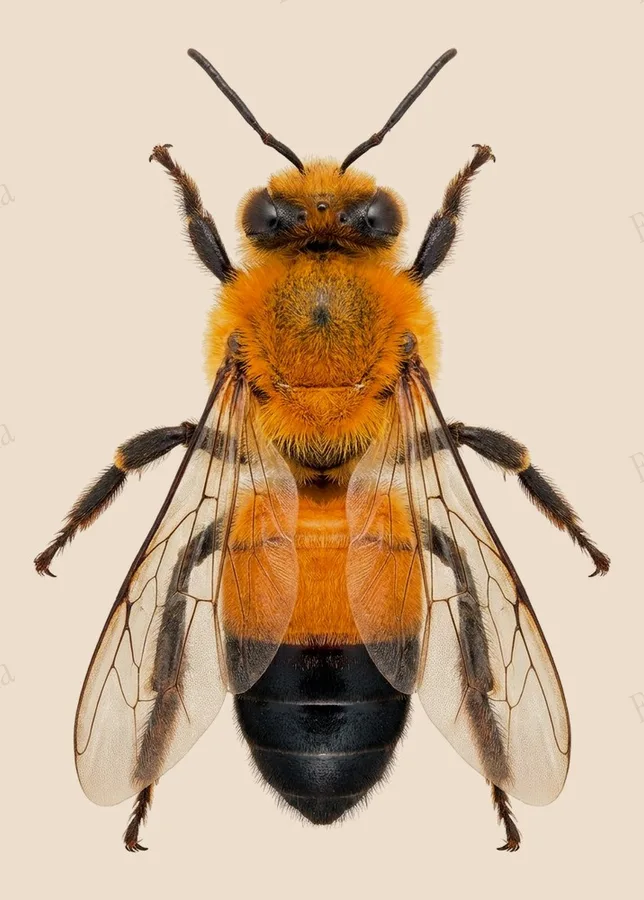
Giant honey bee
A single Giant honey bee colony builds one open comb up to a metre and a half long, storing about 45 kilograms of honey.
| Where | Tall trees and cliffs near forest |
|---|---|
| Size | 17 to 20 mm body length |
| When | January to December |
The Giant honey bee is a large honey bee, roughly twice the length of the common domestic honey bee, with a dark, reddish brown body. Unlike other honey bees it does not nest in a cavity, instead building a single, large vertical comb hanging in the open beneath a tree branch or cliff overhang, sometimes with dozens of other colonies nesting side by side.
Colonies move between nesting sites every few months, following the flowering of local plants, and defend their open comb with synchronised shimmering waves across the surface and a fast, persistent sting response that can follow an intruder a long way from the nest.
Traits
Habitat
Woodland
Colour
Brown, Black
Active
Day
To people
Dangerous
Females can sting; colonies are highly defensive, pursue perceived threats over long distances, and should never be disturbed.
Activity through the year
Often confused with
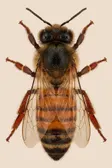
The Asian honey bee is noticeably smaller at about 10 to 11 mm and nests inside enclosed cavities with several combs, unlike the much larger Giant honey bee, which builds one exposed comb in the open.
Questions
Is the Giant honey bee dangerous to people?
Dangerous. Females can sting; colonies are highly defensive, pursue perceived threats over long distances, and should never be disturbed.
When can you see the Giant honey bee?
The Giant honey bee can be seen from January to December, by day.
Plate retouched from a museum specimen photo by Harry Taylor NHM photo unit, Natural History Museum, CC0, GBIF Licence
Report a mistake in this entry
Bees, wasps and ants›Bees and bumblebees›Apis
Last updated 2026-09-27. Every entry is checked against published sources.