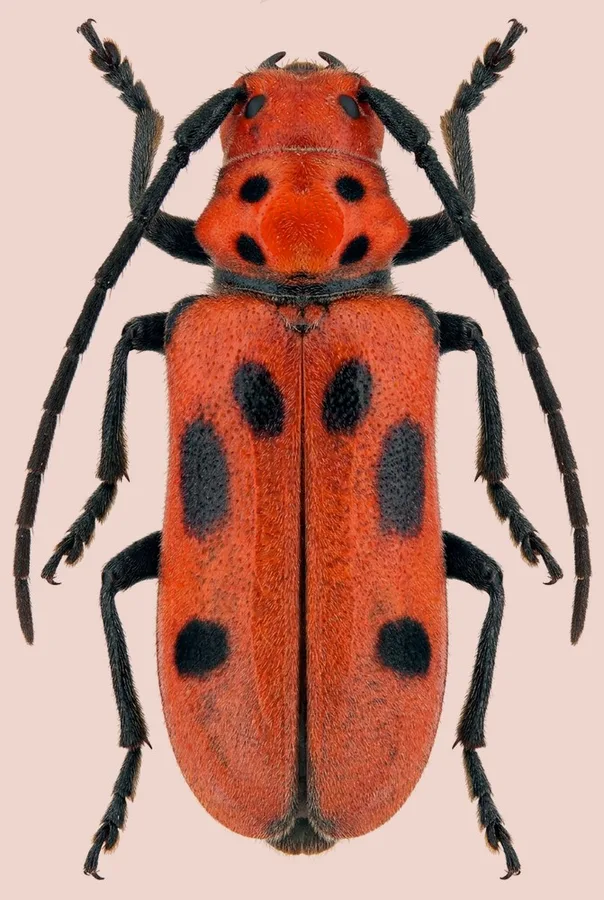
Red milkweed beetle
This red and black beetle sequesters toxic compounds from the milkweed it eats, much like a monarch butterfly, making it unpalatable and risky to predators that eat it.
| Where | Prairies, roadsides and milkweed patches |
|---|---|
| Size | 8 to 15 mm body length |
| When | June to August |
The red milkweed beetle is bright red with several large black spots and long black antennae. Its legs and antennae are entirely black, which separates it from some similar Tetraopes species that have reddish leg segments.
It is closely tied to common milkweed, its main host plant. Larvae bore into the roots while adults feed on the leaves, flowers and stems, and adults are active from June to August, timed to when the milkweed is in bloom.
Traits
Habitat
Grassland
Colour
Red, Black
Active
Day
To people
Mild
Not a danger to touch, but its tissues store toxins from milkweed and it should never be eaten.
Activity through the year
Often confused with
Has reddish upper leg segments, while the red milkweed beetle's legs and antennae are entirely black.
Questions
Is the Red milkweed beetle dangerous to people?
Mild. Not a danger to touch, but its tissues store toxins from milkweed and it should never be eaten.
When can you see the Red milkweed beetle?
The Red milkweed beetle can be seen from June to August, by day.
Plate retouched from a museum specimen photo by University of Texas at Austin, Biodiversity Collections, CC0, GBIF Licence
Report a mistake in this entry
Beetles›Longhorn beetles›Tetraopes
Last updated 2026-09-26. Every entry is checked against published sources.