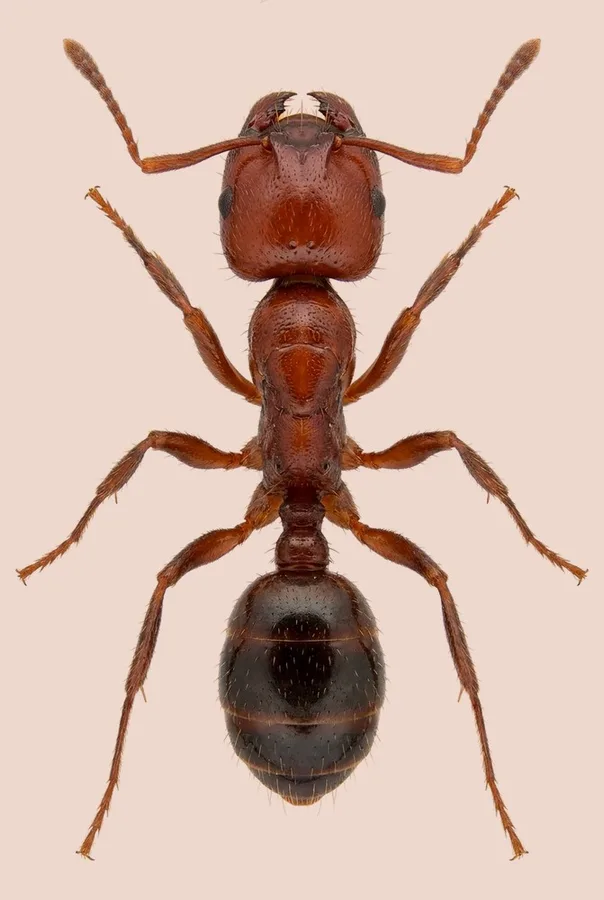
Red imported fire ant
A disturbed mound can send out hundreds of workers at once, each biting to anchor itself before stinging in a tight circular pattern.
| Where | Lawns, fields and disturbed ground |
|---|---|
| Size | 2 to 6 mm body length |
| When | January to December |
Workers of the red imported fire ant are small, 2 to 6 mm ants that are red to brown with a darker black gaster. When a mound is disturbed, workers pour out and attack together, first biting to grip the skin with their jaws and then stinging repeatedly from the tip of the gaster.
Colonies build dome-shaped soil mounds and forage over open ground in lawns, fields and along sidewalks, active in every month of the year across the warm regions it now occupies. Originally introduced from South America through the port of Mobile, Alabama, in the 1930s and 1940s, it has since spread across much of the southern United States.
Traits
Habitat
Towns
Colour
Red, Brown, Black
Active
Day and night
To people
Dangerous
Stings cause burning pain and a pustule, and it also bites to grip the skin first; some people have severe allergic reactions.
Activity through the year
Often confused with
Overall darker, blackish-brown coloring instead of the red-brown body of the Red imported fire ant, and the two species hybridize where their ranges overlap.
Questions
Is the Red imported fire ant dangerous to people?
Dangerous. Stings cause burning pain and a pustule, and it also bites to grip the skin first; some people have severe allergic reactions.
When can you see the Red imported fire ant?
The Red imported fire ant can be seen from January to December, by day and at night.
Plate retouched from a photo by gcschmidt911, CC0, iNaturalist Licence
Report a mistake in this entry
Bees, wasps and ants›Ants›Solenopsis
Last updated 2026-09-27. Every entry is checked against published sources.