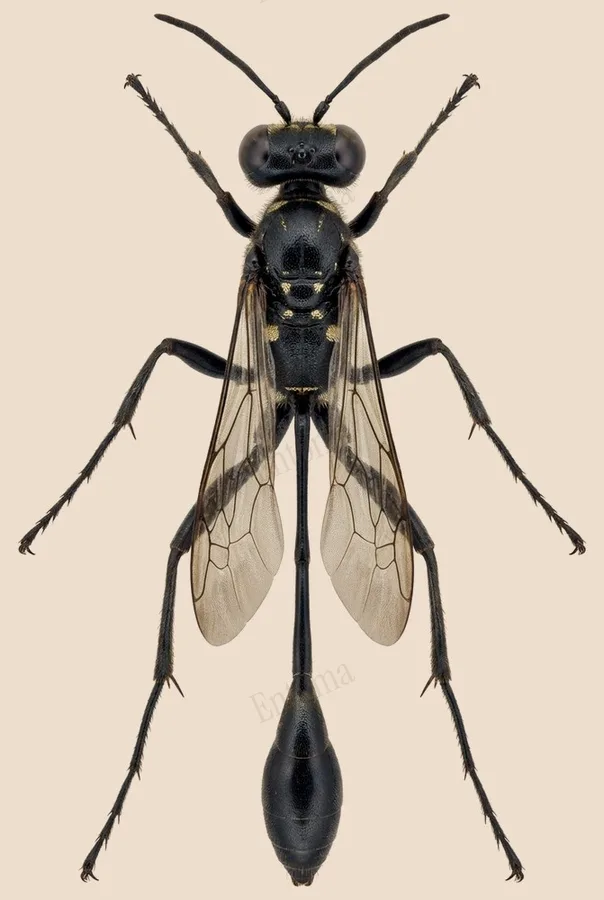
Gold-marked thread-waisted wasp
Females of this wasp drag a paralyzed caterpillar into an underground burrow, then carefully arrange pebbles and soil over the entrance to hide it from robbers.
| Where | Flower-rich meadows, prairies near woodland |
|---|---|
| Size | 20 to 25 mm body length |
| When | July to October |
The Gold-marked thread-waisted wasp has a glossy black body with a sharply thread-like waist between thorax and abdomen, and two pairs of pale yellow to gold patches of hair, one on each side of the thorax and one on the propodeum. It measures about 20 to 25 mm long.
Females dig vertical burrows in sand or bare soil, sting and paralyze a single large moth caterpillar, then lay one egg on it before sealing the nest entrance. Adults visit flowers such as horsemint and goldenrod for nectar through late summer and into autumn.
Traits
Habitat
Grassland
Colour
Black, Yellow
Active
Day
To people
Mild
Females can sting if handled, but this wasp is not aggressive and spends its time digging burrows and visiting flowers rather than defending a nest.
Activity through the year
Often confused with
Also black with a thin thread-like waist, but carries a solid red-orange band across the abdomen instead of the pale gold hair patches on the thorax and propodeum of the Gold-marked thread-waisted wasp.
Questions
Is the Gold-marked thread-waisted wasp dangerous to people?
Mild. Females can sting if handled, but this wasp is not aggressive and spends its time digging burrows and visiting flowers rather than defending a nest.
When can you see the Gold-marked thread-waisted wasp?
The Gold-marked thread-waisted wasp can be seen from July to October, by day.
Plate retouched from a museum specimen photo by Davidson College, CC0, GBIF Licence
Report a mistake in this entry
Bees, wasps and ants›Thread-waisted wasps›Eremnophila
Last updated 2026-09-27. Every entry is checked against published sources.