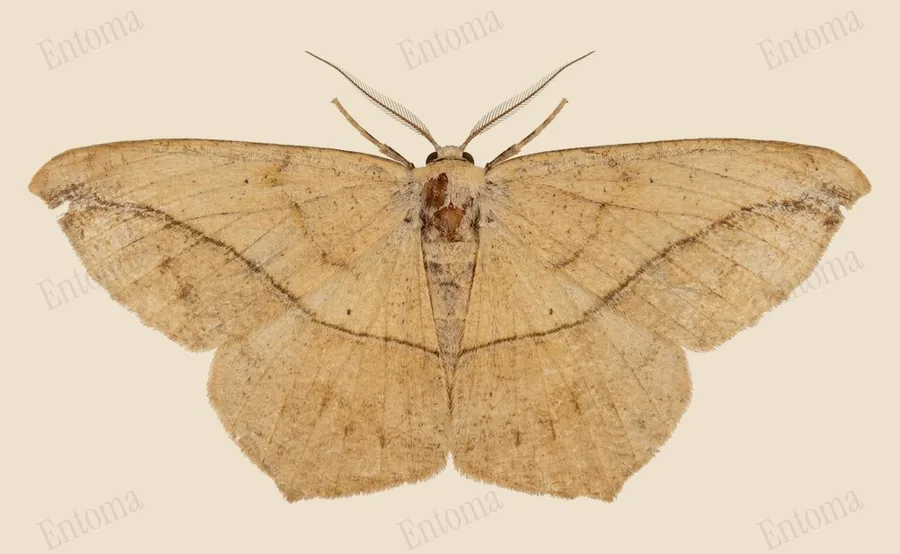
Large maple spanworm moth
The caterpillar rests with one end raised and stretched outward, mimicking a broken twig on the branch where it feeds, fooling birds and bats that hunt by sight.
| Where | Hardwood forests, parks and gardens |
|---|---|
| Size | 35 to 50 mm wingspan |
| When | May to October |
Wing color varies widely from yellow to brown, dark brown or deep purple, sometimes crossed by a thin diagonal line or marked with dark parenthesis-like shapes near the head and a small black dot near each hindwing tip. Wingspan runs from 35 to 50 mm.
Caterpillars are thin, brown and twig-like, holding one end of the body raised and stretched outward to pass as part of a branch. They feed on a wide range of trees and garden plants, including maple, oak, cherry, willow and poplar, and adults come readily to lights at night.
Traits
Habitat
Woodland
Colour
Brown, Yellow
Active
Night
To people
Comes readily to porch lights at night; the caterpillar's twig-like disguise is its main defense, and it poses no risk to people.
Activity through the year
Often confused with
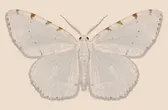
The lesser maple spanworm is much smaller, spanning only 18 to 27 mm against the large maple spanworm's 35 to 50 mm, and has a plainer, pale cream forewing instead of the larger species' varied yellow, brown or purple tones.
Questions
Is the Large maple spanworm moth dangerous to people?
Comes readily to porch lights at night; the caterpillar's twig-like disguise is its main defense, and it poses no risk to people.
When can you see the Large maple spanworm moth?
The Large maple spanworm moth can be seen from May to October, at night.
Plate retouched from a photo by sgalick, CC0, iNaturalist Licence
Report a mistake in this entry
Butterflies and moths›Geometer moths›Prochoerodes
Last updated 2026-09-26. Every entry is checked against published sources.