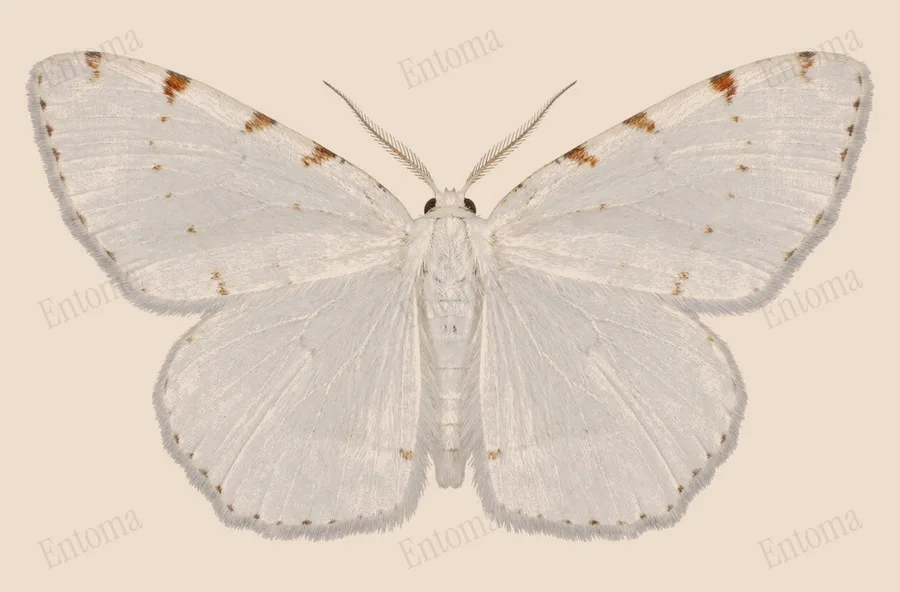
Lesser maple spanworm moth
Adults emerge from a single yearly generation, hatching from eggs laid the previous autumn, and feed mainly on maple leaves alongside birch, poplar, fir and hemlock.
| Where | Deciduous and mixed forests |
|---|---|
| Size | 18 to 27 mm wingspan |
| When | June to August |
The forewings are pale cream to white, crossed by faint wavy yellow-brown lines and marked along the leading edge with tiny reddish-brown dots, with a checkered black and white fringe along the wing margins. Wingspan runs from 18 to 27 mm.
One generation flies per year: eggs laid in autumn hatch the next summer, and the looper caterpillars feed on the leaves of sugar, red and silver maple as well as birch and poplar in deciduous and mixed forests.
Traits
Habitat
Woodland
Colour
White, Brown, Yellow
Active
Night
To people
Comes to lights at night and poses no risk to people; its twig-mimicking posture as a caterpillar is its main defense.
Activity through the year
Often confused with
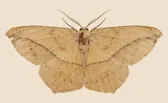
The large maple spanworm is much bigger, spanning 35 to 50 mm against the lesser maple spanworm's 18 to 27 mm, and comes in yellow, brown or purplish tones rather than pale cream.
Questions
Is the Lesser maple spanworm moth dangerous to people?
Comes to lights at night and poses no risk to people; its twig-mimicking posture as a caterpillar is its main defense.
When can you see the Lesser maple spanworm moth?
The Lesser maple spanworm moth can be seen from June to August, at night.
Plate retouched from a photo by W Rao, CC BY 4.0, iNaturalist Licence
Report a mistake in this entry
Butterflies and moths›Geometer moths›Macaria
Last updated 2026-09-26. Every entry is checked against published sources.